

Summarize this article with AI
The minimum salary in Turkey plays a critical role in determining the standard of living for millions of workers and impacts various sectors of the economy. Understanding how it is set, what factors influence it, and its broader economic implications is essential for employers, employees, and investors alike. This article provides a comprehensive guide to the minimum salary in Turkey, covering current rates, updates, and related legal considerations for emloyee’ & emloyers.
The minimum salary in Turkey refers to the lowest legally permissible wage that employers must pay their workers. The Ministry of Labor and Social Security anonse the rate, and it is revised periodically, typically once (in December) a year. This wage is intended to protect workers from exploitation and ensure they can meet basic living expenses.
As of 2026, the gross minimum wage is TRY 33,030.00 per month in Turkey, with a net take-home salary TRY 28,075.50- (About 555.00 EUR) after deductions such as taxes and social security contributions. This rate reflects Turkey’s response to inflationary pressures and cost-of-living increases. The minimum wage is reviewed annually, meaning employers and employees can expect updates in January.

In Turkey, the decision regarding the minimum wage is made by the Minimum Wage Determination Commission. In the relevant commission, there are 3 different parties, each with one vote, including the employee, employer and state representatives. The clear determination regarding the minimum wage in Turkey is made in this commission. In order for the relevant decisions to be final in the commission, a majority vote is required instead of unanimity.
The basic salary in Turkey is determined by several economic and social factors:
The Turkish government enforces strict regulations to ensure that all employees receive at least the minimum wage. Key legal aspects include:
In Turkey, minimum wage employees are entitled to various benefits beyond their base salary. These include:
To calculate the employer’s cost for the minimum wage, the gross minimum wage amount must be taken into account. This gross amount represents the wage before deductions for taxes, insurance, and union fees. For 2026, the gross minimum wage is set at TRL 33,30.00. When adding the employer’s social security premium and unemployment insurance premium contributions, the total cost for an employee earning the minimum wage is determined. The factors considered in calculating the employer’s total cost include:
| Gross Minimum Wage | : | TRL 33,030.00 |
| Social Security Premium (21.75% employer contribution) | : | TRL 7,184.00 |
| Unemployment Insurance Premium (2% employer contribution) | : | TRL 660.60 |
| Total Cost to the Employer | : | TRL 40,874.60 |
NOTE: In Türkiye, the government provides social security premium discounts to employers who do not have any outstanding social security contribution debts:
For employers, especially those in labor-intensive sectors like manufacturing and retail, the minimum wage impacts operating costs. Employers must plan for annual or semi-annual wage adjustments to remain compliant. While these increases can raise operational costs, they also ensure a motivated and financially stable workforce, which can lead to higher productivity.
Some businesses may choose to automate or outsource certain tasks to mitigate the impact of wage increases. However, the government’s regulations aim to strike a balance between maintaining a livable wage for workers and not overburdening employers.
Turkey’s minimum wage increases can have inflationary effects, as higher wages typically lead to increased consumer spending, pushing demand for goods and services. However, this increased spending power is often balanced by inflationary pressures, especially in times of economic volatility.
The Turkish government uses minimum wage adjustments as a tool to stimulate the economy by boosting workers’ purchasing power, which in turn drives consumer demand. This has broader implications for sectors such as retail, hospitality, and real estate.
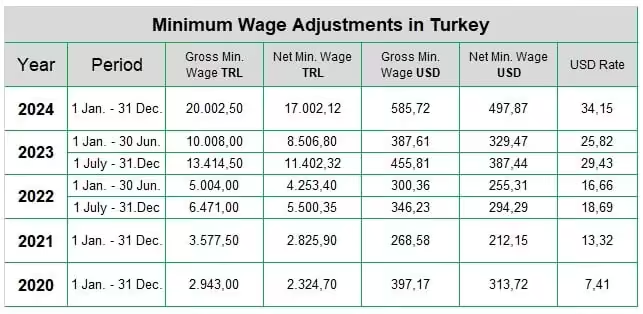
To calculate the net minimum wage (after tax and deductions), be uses the following steps:
The result will give you the net salary an employee takes home.

Looking ahead, the minimum wage in Turkey will likely continue to rise in response to inflation and economic conditions. The government has indicated its commitment to ensuring that the minimum wage keeps pace with the rising cost of living, while also balancing employer concerns about increased labor costs.
With Turkey’s inflation rate being one of the highest in the region, businesses and workers alike should anticipate further adjustments in the near future.
The minimum salary in Turkey is a vital element of the country’s labor market, influencing everything from consumer spending to business operating costs. For both employers and employees, understanding the legal requirements and staying informed about updates is crucial to navigating Turkey’s evolving economic landscape.
By keeping track of wage adjustments and legal obligations, businesses can ensure compliance, and employees can secure their financial well-being.
A&M Consuting Co. is an accounting and tax consultancy firm specializing in providing end-to-end HR and Payroll Services to global investors and foreign entrepreneurs in Turkey with its expert team having SGK (Social Security Institution) careers.
We continue to provide cost-effective HR & Payroll consultancy services to global companies and individual entrepreneurs who want to enter the Turkish market smoothly and quickly, ensure full compliance with local legislation and facilitate their access to tax refunds.
DISCOVER OUR SERVICES:
You can reach out to our experienced consultans via email or by filling out the Contact Form on our website’s contact page
The gross minimum wage in Turkey for 2025 is TRY33,030.00 per month, with a net take-home salary of approximately TRY 28,075.50 after deductions.
The minimum wage is typically reviewed and updated twice a year, in January and July, to account for inflation and economic changes.
The Minimum Salary Determination Commission is responsible for setting the minimum wage in consultation with trade unions, employer representatives, and government officials.
The general minimum salary applies across all sectors, though certain industries may have collective bargaining agreements that offer higher wages.
Deductions include income tax, social security contributions and unemployment insurance premiums.
Yes, Turkish labor law mandates that overtime work be compensated at 1.5 times the regular wage.
Inflation plays a significant role in determining wage increases, as rising living costs often lead to wage adjustments to ensure workers’ purchasing power.
Employers who fail to pay the minimum wage face fines, legal action, and may be subject to further penalties from labor courts.
Part-time workers receive wages based on the number of hours worked, but they must still be paid at least the hourly equivalent of the minimum wage.
In addition to salary, employees are entitled to social security benefits, paid leave, severance pay, and other rights as per Turkish labor laws.
No, the minimum wage is standardized nationwide, although living costs may vary from region to region.
For employers, especially in labor-intensive industries, minimum wage increases can raise operational costs, requiring financial planning for wage adjustments.
Increases in the minimum wage boost consumer spending but may also contribute to inflationary pressures, affecting overall economic stability.
No, paying less than the legal minimum wage is prohibited, even if both parties agree, and doing so can result in fines and legal action.
Foreign workers in Turkey are entitled to the same minimum wage protections as Turkish citizens, with no exceptions based on nationality.
Recent Posts


WhatsApp Us