

Expanding your business into Türkiye often requires relocating key personnel to establish operations, manage local teams, oversee projects, or transfer technical expertise. Whether you are opening a subsidiary, launching a new investment, or executing a long-term project, employing foreign nationals in Türkiye requires compliance with Turkish immigration and employment legislation.
A Turkey Work Visa enables eligible foreign employees to enter Türkiye for employment purposes when the application is submitted from outside the country. The process involves both the foreign employee and the Turkish employer, with applications coordinated through the relevant Turkish Embassy or Consulate and the Ministry of Labour and Social Security.
For international companies, obtaining a Work Visa is only one part of the process. Employers must also meet various legal obligations, including company registration, payroll setup, social security registration, and ongoing tax and employment compliance before the employee can legally start working in Türkiye.
This guide explains how foreign companies can sponsor overseas employees, understand the Work Visa process, prepare the required documentation, and comply with Turkish employment regulations when relocating international talent to Türkiye.
Planning to hire foreign employees from abroad?
This guide focuses on Turkey Work Visa applications submitted outside Türkiye for foreign employees.
If you are a foreign company director, shareholder, investor, or a foreign national eligible to apply from within Türkiye, please refer to our comprehensive Work Permit in Turkey guide, which explains the different application route, eligibility criteria, and legal requirements.
In this guide, you will learn:
.
Although the terms Turkey Work Visa and Work Permit are often used interchangeably, they refer to two different application routes under Turkish legislation.
A Turkey Work Visa is intended for foreign employees who will relocate to Türkiye from abroad to work for a Turkish employer. The application is initiated outside Türkiye through a Turkish Embassy or Consulate in the employee’s country of residence or nationality.
A Work Permit, on the other hand, is generally used for applications submitted from within Türkiye, where legally permitted. This route may also apply to foreign company directors, shareholders, investors, and executive managers, depending on their legal status and eligibility.
Understanding the distinction between these two procedures is essential before starting the application process, as the required documents, authorities involved, and legal requirements differ.
| Turkey Work Visa | Work Permit in Turkey |
|---|---|
| Designed for foreign employees relocating from abroad | Designed for eligible applicants applying from within Türkiye |
| Application starts at a Turkish Embassy or Consulate | Application is submitted in Türkiye through the Ministry of Labour and Social Security |
| Intended for foreign employees | Covers eligible foreign employees, company directors, shareholders, executive managers, and investors |
| Used before travelling to Türkiye | Used where the applicant qualifies to apply from within Türkiye |
| Requires employer sponsorship | May involve different eligibility criteria depending on the applicant’s role |
As a general rule:
Choosing the wrong application route can result in unnecessary delays or additional document requests.
If your case involves company formation, foreign shareholders, directors, investors, or applications submitted from within Türkiye, we recommend reading our comprehensive Work Permit in Turkey guide, where we explain the applicable criteria, employer obligations, salary requirements, and step-by-step application process in detail.
The Work Visa and Work Permit processes serve different legal purposes. Determining the correct route before preparing your application can save significant time and help avoid procedural errors.
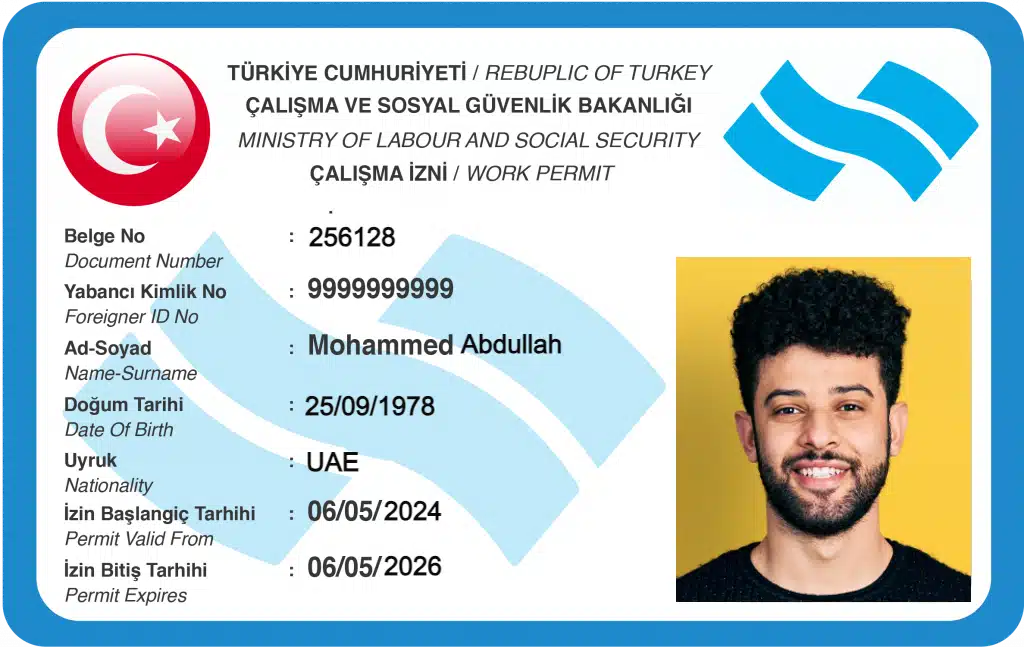
A Turkey Work Visa is generally required when a foreign company intends to employ and relocate a foreign national to Türkiye from another country.
The application is initiated before the employee travels to Türkiye and allows the individual to enter the country for employment purposes following approval by the relevant Turkish authorities.
For international employers, obtaining the appropriate Work Visa is an essential part of establishing a compliant workforce in Türkiye.
Foreign companies frequently obtain Work Visas when relocating employees such as:
Regardless of the position, the employee must satisfy the applicable immigration and employment requirements before commencing work in Türkiye.
A Turkey Work Visa is commonly required in situations such as:
International companies opening a branch, liaison office, or subsidiary often relocate senior managers and operational staff to supervise the launch of their Turkish operations.
Companies investing in manufacturing, logistics, technology, healthcare, tourism, or other industries frequently transfer experienced personnel to oversee the investment during its initial stages.
Engineering firms and contractors regularly relocate project managers, site engineers, supervisors, and technical specialists to support construction and infrastructure projects in Türkiye.
Manufacturers supplying industrial machinery or specialised equipment may temporarily relocate engineers and technical experts to perform installation, testing, commissioning, and staff training.
Multinational companies often transfer experienced employees between international offices to ensure operational consistency, knowledge transfer, and effective management of Turkish operations.
Unlike some immigration systems, a Turkey Work Visa cannot normally be obtained without employer involvement.
The Turkish employer plays a central role throughout the application by:
For this reason, careful coordination between the employer and the employee is essential throughout the application process.
A Turkey Work Visa is not the correct route for every foreign national.
Different procedures generally apply to:
These applicants should generally follow the Work Permit application route, which is subject to different eligibility requirements and evaluation criteria.
👉 Learn more in our comprehensive Work Permit in Turkey guide.
Before preparing a Work Visa application, employers should first determine whether the applicant qualifies as a foreign employee or falls into another category, such as a shareholder, director, or investor. Choosing the correct application route from the beginning can help avoid unnecessary delays and additional administrative procedures.
A Turkey Work Visa application is not based solely on the employee’s qualifications. The sponsoring employer must also satisfy various legal requirements before a foreign employee can be authorised to work in Türkiye.
These requirements are designed to ensure that employers comply with Turkish labour, tax, and social security legislation while maintaining the necessary financial and operational capacity to employ foreign nationals.
Before initiating a Work Visa application, employers should review their legal status and ensure they meet the applicable criteria.
A foreign employee can only be sponsored by a legally established employer in Türkiye.
Depending on the business structure, the sponsoring employer may be:
Companies planning to recruit foreign employees should ensure their business registration has been completed before starting the Work Visa process.
Depending on the nature of the application, employers may be required to satisfy certain evaluation criteria, including:
The applicable criteria vary depending on factors such as the employee’s position, the employer’s legal structure, and any exemptions available under Turkish legislation.
Employer responsibilities do not end when the Work Visa is approved.
Once the employee starts working in Türkiye, employers must continue to comply with Turkish legislation by:
Ongoing compliance is essential for maintaining the employee’s legal working status in Türkiye.
Some employers may qualify for special evaluation procedures depending on their industry or investment profile.
Examples include:
Where applicable, some of the standard employment or financial criteria may be reduced or waived under Turkish legislation.
This guide provides an overview of the employer’s role in the Turkey Work Visa process.
If you would like detailed information about:
we recommend reading our comprehensive Work Permit in Turkey guide, where these topics are explained in detail.
Many Work Visa applications are delayed because employers focus only on the employee’s documents. In practice, the sponsoring company’s legal compliance is just as important as the employee’s eligibility. Reviewing both before applying helps reduce delays and improves the likelihood of a successful application.
A successful Turkey Work Visa application depends on accurate and complete documentation from both the foreign employee and the Turkish employer.
Since the application is submitted through a Turkish Embassy or Consulate and evaluated by the Ministry of Labour and Social Security, all supporting documents should be carefully prepared before the application is initiated.
Depending on the employee’s nationality, profession, employer, and project type, additional documents may be requested during the evaluation process.
The employee is responsible for providing documents confirming their identity, qualifications, and eligibility to work in Türkiye.
Typical documents include:
Certain professions, such as engineers, healthcare professionals, or technical specialists, may be required to submit additional documentation depending on the nature of the position.
The sponsoring employer must submit corporate documents demonstrating that the company is legally authorised to employ foreign personnel in Türkiye.
Typical employer documents include:
Depending on the application, the Ministry may request additional documents to verify the employer’s legal status and compliance with Turkish legislation.
As the application begins outside Türkiye, the foreign employee will normally submit documents to the relevant Turkish Embassy or Consulate.
Requirements vary depending on the country where the application is made, but commonly include:
Applicants should always check the document requirements of the relevant Turkish diplomatic mission before attending their appointment.
Documents issued outside Türkiye may need to be:
Preparing properly certified documents before submission helps prevent unnecessary delays during the evaluation process.
Before initiating a Turkey Work Visa application, employers should verify that:
✔ The company is legally registered in Türkiye.
✔ Corporate registration documents are up to date.
✔ Employment information is complete and accurate.
✔ The employee’s passport is valid.
✔ Supporting documentation has been prepared.
✔ Any required translations or legalisation have been completed.
A complete application package significantly reduces the likelihood of additional document requests during the review process.
Preparing employer and employee documents simultaneously is often the most efficient approach. Early document preparation helps minimise processing delays and allows the application to proceed more smoothly through both the Turkish Embassy or Consulate and the Ministry of Labour and Social Security.
You may also find these guides helpful before submitting a Turkey Work Visa application:
Obtaining a Turkey Work Visa involves coordinated actions by both the foreign employee and the Turkish employer. Unlike many immigration procedures, neither party can usually complete the process independently.
The application begins outside Türkiye at a Turkish Embassy or Consulate and continues with the employer’s submission to the Ministry of Labour and Social Security. Once approved, the employee may travel to Türkiye and legally begin employment after the required registrations have been completed.
Understanding each stage of the process helps employers avoid unnecessary delays and ensures a smoother relocation of international personnel.
Before initiating the application, employers should confirm that:
Reviewing eligibility at the beginning helps prevent delays later in the process.
Once eligibility has been confirmed, both parties should prepare the required documentation.
The employee prepares personal and professional documents, while the employer prepares the necessary corporate documentation required for the application.
Submitting complete documentation from the outset significantly reduces the likelihood of additional document requests.
The foreign employee submits the Work Visa application to the Turkish Embassy or Consulate in their country of residence or nationality.
During this stage, the employee:
This reference number is subsequently used by the employer to complete the employer-side application in Türkiye.
After the employee applies at the Turkish Embassy or Consulate, the employer submits the required corporate documentation to the Ministry of Labour and Social Security within the legally prescribed timeframe.
During this stage, the Ministry evaluates:
Additional information or documentation may be requested if necessary.
If the application is approved, the employee receives the Work Visa through the Turkish Embassy or Consulate.
The employee may then travel to Türkiye and complete the entry procedures in accordance with the approved visa.
At this stage, the individual is authorised to enter Türkiye for employment purposes.
After the employee arrives in Türkiye, the employer must complete all mandatory employment formalities before the employee begins work.
These typically include:
Employers remain responsible for fulfilling these obligations throughout the employee’s period of employment.
| Step | Responsible Party |
|---|---|
| Confirm employee eligibility | Employer |
| Prepare application documents | Employer & Employee |
| Submit application at the Turkish Embassy or Consulate | Employee |
| Submit employer documents to the Ministry | Employer |
| Receive Work Visa approval | Embassy & Ministry |
| Complete employment registration in Türkiye | Employer |
The Work Visa process requires close coordination between the foreign employee and the sponsoring employer. Delays often occur when one party completes their part of the application while the other misses the applicable deadlines. Preparing documents together and monitoring the application timeline helps ensure a more efficient process.
To better understand the legal requirements after a Work Visa is approved, you may also find these resources helpful:
Obtaining a Turkey Work Visa is only the first stage of employing foreign personnel in Türkiye. Once the employee arrives in the country, the employer must complete a number of legal and administrative obligations before and during the employment relationship.
Failure to fulfil these obligations may expose the employer to administrative penalties and other compliance risks under Turkish labour and social security legislation.
For this reason, international companies should prepare not only for the visa application itself but also for the employment process that follows.
Before the employee starts working, the employer must complete the required registration with the Social Security Institution (SGK) in accordance with Turkish legislation.
SGK registration provides access to the Turkish social security system and is one of the employer’s fundamental legal obligations.
👉 Learn more about our Social Security Registration in Turkey.
Employers must establish a compliant payroll process for foreign employees working in Türkiye.
This includes:
Proper payroll administration helps ensure compliance with Turkish employment and tax regulations throughout the employee’s assignment.
👉 Learn more about our HR & Payroll Services in Turkey.
Employers remain responsible for various statutory obligations after employment begins.
These may include:
Maintaining ongoing compliance is just as important as obtaining the initial Work Visa approval.
👉 Explore our Accounting & Bookkeeping Services in Turkey and Tax in Turkey guides to learn more about employer compliance requirements.
Foreign employees should always maintain a valid legal status throughout their employment.
Employers should monitor:
Preparing renewal applications in advance helps avoid interruptions to the employee’s right to work in Türkiye.
For international companies, relocating employees involves much more than obtaining a visa.
A successful relocation typically requires coordination between:
Working with an experienced local advisor helps employers manage these responsibilities efficiently while reducing compliance risks.
Many employers focus on obtaining the Work Visa but overlook the legal obligations that begin after the employee arrives in Türkiye. Establishing compliant payroll, social security, and tax procedures from day one helps ensure a smooth and legally compliant employment relationship.
If your company is planning to employ foreign personnel in Türkiye, you may also find these guides helpful:
Employing foreign nationals in Türkiye involves more than obtaining a Turkey Work Visa. Many delays and compliance issues arise because employers underestimate the legal and administrative requirements involved in the process.
Understanding the most common mistakes can help international companies avoid unnecessary delays, additional costs, and potential administrative penalties.
One of the most common mistakes is confusing a Turkey Work Visa with a Work Permit application.
A Turkey Work Visa is generally intended for foreign employees applying from outside Türkiye, while company directors, shareholders, investors, and certain applicants already in Türkiye may need to follow a different application route.
Selecting the correct procedure at the beginning helps avoid rejected or delayed applications.
👉 Learn more in our Work Permit in Turkey guide.
Many companies wait until the employee is expected to start work before beginning the application.
Since the process involves both the Turkish employer and the employee applying through a Turkish Embassy or Consulate, employers should begin preparations well in advance of the planned relocation date.
Early planning allows sufficient time for document preparation, application processing, and travel arrangements.
Incomplete or inconsistent documentation is one of the leading causes of application delays.
Employers should ensure that:
A carefully prepared application package significantly improves processing efficiency.
Receiving Work Visa approval does not complete the employer’s legal responsibilities.
After the employee arrives in Türkiye, employers must continue to comply with Turkish legislation by completing payroll, social security registration, and ongoing statutory reporting obligations.
Ignoring these requirements may result in compliance issues after employment has already begun.
Work authorisation should be monitored throughout the employee’s assignment.
Employers should keep track of renewal dates and initiate renewal procedures within the applicable legal timeframe to prevent interruptions to the employee’s legal right to work.
Not every foreign national follows the same application route.
The applicable procedure depends on factors such as:
Seeking professional advice before applying can help determine the most appropriate procedure.
Successful international companies typically approach the process by:
✔ Planning recruitment well in advance.
✔ Confirming the correct application route.
✔ Preparing employer and employee documentation simultaneously.
✔ Ensuring payroll and SGK compliance before the employee starts work.
✔ Monitoring renewal deadlines and ongoing legal obligations.
A structured approach helps reduce delays while supporting long-term compliance with Turkish employment legislation.
The most successful Work Visa applications begin long before the employee visits the Turkish Embassy or Consulate. Early planning, complete documentation, and employer compliance are the key factors that contribute to a smooth relocation process.
To better prepare for employing foreign personnel in Türkiye, you may also wish to read:
Relocating foreign employees to Türkiye requires more than preparing application documents. Employers must coordinate immigration procedures, corporate compliance, payroll, tax obligations, and social security registration while ensuring that every stage complies with Turkish legislation.
At A&M Consulting Co., we provide practical, end-to-end support for international companies establishing or expanding their operations in Türkiye. Our multidisciplinary approach enables employers to manage the entire employee relocation process through a single professional advisor.
We assist international employers with every stage of the Work Visa process, including:
Our objective is to help employers complete the relocation process efficiently while reducing administrative risks and ensuring compliance with Turkish legislation.
Our clients include foreign investors and international companies operating in sectors such as:
Whether you are relocating a single executive or building an entire local team, we tailor our services to your business requirements.
Companies choose A&M Consulting Co. because we offer:
✔ End-to-end business support under one roof.
✔ Practical experience with foreign investment projects.
✔ Expertise in company formation, immigration, payroll, tax, and corporate compliance.
✔ English-speaking professionals familiar with international business practices.
✔ Tailored solutions for foreign-owned companies operating in Türkiye.
Instead of working with multiple service providers, international businesses can manage their company formation, Work Visa process, payroll, accounting, and ongoing compliance through a single point of contact.
Hiring foreign employees is often only one step in establishing operations in Türkiye.
Many of our clients also require assistance with:
Our integrated service model enables foreign companies to focus on growing their business while we manage the regulatory and administrative requirements.
A successful employee relocation project depends not only on obtaining a Work Visa but also on ensuring that the employer remains fully compliant with Turkish corporate, employment, tax, and social security regulations throughout the employee’s assignment.
Hiring foreign employees in Türkiye requires careful planning, accurate documentation, and compliance with Turkish immigration, labour, tax, and social security regulations.
Whether you are relocating a single specialist or building an entire local team, obtaining the correct Work Visa is only one part of a successful employee relocation process. Employers must also ensure that corporate registration, payroll, SGK registration, and statutory compliance are handled correctly from the outset.
At A&M Consulting Co., we provide comprehensive support to foreign investors and international companies throughout every stage of the process.
Our experienced consultants can assist you with:
✔ More than 20 years of professional experience
✔ End-to-end support for foreign companies
✔ English-speaking consultants
✔ Expertise in immigration, company formation, payroll, accounting, and tax
✔ Practical solutions tailored to international businesses
If your company is planning to relocate foreign employees to Türkiye, our specialists are ready to guide you through every stage of the Work Visa process.
Whether you need assistance with a single employee or a large-scale international recruitment project, we can help you develop a compliant and efficient relocation strategy.
Contact A&M Consulting Co. today to discuss your Turkey Work Visa requirements with one of our experienced consultants.
A Turkey Work Visa is your gateway to a thriving job market and a culturally enriching experience. With the right preparation and guidance, you can navigate the application process smoothly and enjoy all that Turkey has to offer.
Whether you’re a company based in Turkey or foreign worker, Turkey’s work visa program opens doors to exciting employment & career opportunities in 2024.
Contact A&M Consulting Co., an experienced business consulting firm, to guide you through the Turkey Work Visa process and secure your future or to reach foreign employment opportunities for your company in this dynamic country.
A&M Consulting Co. is an business consultancy firm specialized in getting Turkey Work Visa for especially global investor and foreign companies & entrepreneurs.
We continue to provide cost-effective services as Working Visa consultancy to global companies and individual entrepreneurs who want to enter the Turkey’s market smoothly, quickly, and fully comply with local legislation.
DISCOVER OUR SERVICES:
You can reach out to our experienced consultans via email or by filling out the Contact Form on our website’s contact page
A Turkey Work Visa allows foreign employees to enter Türkiye for employment purposes when they are recruited from outside the country. The application is initiated through a Turkish Embassy or Consulate and requires sponsorship by a Turkish employer.
A Turkey Work Visa is generally required for foreign nationals who will relocate to Türkiye from abroad to work for a Turkish employer. It is commonly used for engineers, managers, IT professionals, technical specialists, project staff, and other qualified employees.
No. A Turkey Work Visa is generally used for foreign employees applying from outside Türkiye, while a Work Permit is typically the appropriate route for eligible applicants applying from within Türkiye, including many company directors, shareholders, and investors.
Yes. A legally established employer in Türkiye can sponsor eligible foreign employees, provided the company satisfies the applicable legal requirements and completes the employer-side application process.
No. A valid employment offer from a Turkish employer is required before a Turkey Work Visa application can be submitted.
The foreign employee submits the initial application at the relevant Turkish Embassy or Consulate in their country of residence or nationality. The employer then completes the corresponding application procedures in Türkiye.
Required documents generally include a valid passport, visa application forms, employment documents, employer corporate documents, and any additional documents requested by the Turkish authorities.
Processing times vary depending on the application and supporting documents. In many cases, the process is completed within several weeks, although complex applications may take longer.
No. The employer must complete all required legal procedures, including Social Security (SGK) registration and other employment formalities, before the employee begins working.
Foreign shareholders and company owners generally follow a different application route. Depending on their circumstances, they may need to apply for a Work Permit instead of a Turkey Work Visa.
Yes. Work authorisation may be renewed before its expiry, provided the employer and employee continue to satisfy the applicable legal requirements.
Yes, but a change of employer generally requires a new work authorisation process. The existing approval cannot simply be transferred to another employer.
Yes. Turkish authorities evaluate salary levels as part of the work authorisation process. The required salary depends on the employee’s profession and position.
Yes. Eligible family members may apply for residence permits in accordance with Turkish immigration legislation. However, family members who wish to work must obtain their own work authorisation.
Foreign employees are frequently recruited in industries such as manufacturing, construction, engineering, information technology, tourism, healthcare, energy, logistics, and professional services.
Employers should ensure renewal applications are submitted before the existing authorisation expires. Allowing a work authorisation to lapse may affect the employee’s legal right to work in Türkiye.
Not necessarily. Many multinational companies operate in English, particularly in sectors such as technology, engineering, and international business. However, Turkish language skills may be beneficial depending on the role.
Yes. International companies may sponsor multiple foreign employees, provided each application satisfies the applicable legal and employer requirements.
Yes. We assist international companies with employer eligibility assessments, Work Visa applications, company formation, payroll implementation, SGK registration, accounting, tax compliance, and ongoing corporate support.
Turkey Work Visa applications involve immigration, employment, payroll, tax, and corporate compliance requirements. Working with an experienced advisor helps employers avoid unnecessary delays, reduce compliance risks, and manage the entire relocation process more efficiently.
Every company has different recruitment plans, business structures, and workforce requirements. Whether you are relocating a single employee or building an international team in Türkiye, obtaining the correct Work Visa requires careful planning and compliance with Turkish legislation.
If you still have questions about the Turkey Work Visa process, our experienced consultants are ready to assist you.
We can help you understand the applicable requirements, review your company’s eligibility, and guide you through each stage of the application process—from the initial planning phase to the employee’s arrival and ongoing compliance in Türkiye.
Get in touch if you need assistance with:
Whether you are an investor, HR manager, or international business owner, our team is ready to provide practical and reliable guidance tailored to your business needs.
Contact A&M Consulting Co. today to discuss your project with one of our consultants.
Abdullah Mercanlı is the Co-Founder of A&M Consulting Co. and has more than 20 years of professional experience in accounting, taxation, finance, payroll, and social security. He supports international businesses and foreign investors with tax compliance, company formation, and business operations in Turkey.
Registered member of ISMMMO · Registration No. 50555
Recent Posts


WhatsApp Us