
Company Registration in Turkey
Company Registration in Turkey 2026: Complete Guide for Global Investors
Company Registration in Turkey is an attractive option for foreign investors and entrepreneurs looking to expand their business into new markets. With its strategic location between Europe and Asia, Turkey offers access to a vast consumer base and a dynamic economy. This article will provide a comprehensive guide on how to register a company in Turkey, covering the types of business entities, the registration process, and the benefits of doing business in the country.
Why Register a Company in Turkey? Key Benefits for Global Investors
Turkey has become a significant destination for business expansion due to its strategic geographical location, growing economy, and investor-friendly policies. Here are some key reasons to consider business incorporation in Turkey:
Strategic Location: Turkey’s unique position as a bridge between Europe and Asia provides easy access to multiple markets, including Europe, the Middle East, and Central Asia.
Growing Economy: With one of the fastest-growing economies globally, Turkey offers numerous opportunities for businesses in various sectors.
Investment Incentives: The Turkish government offers various incentives, including tax breaks, subsidies, and grants, particularly in sectors like technology, manufacturing, and renewable energy.
Skilled Workforce: Turkey boasts a young and educated workforce, making it an ideal location for companies needing skilled labor.
Ease of Doing Business: Turkey has simplified its company registration process, making it easier for foreign investors to start and operate a business.
Choosing the Right Commercial Area
When to register a company Turkey, whether to choose the mainland or free zones or Technoparks depends on the company’s field of activity, goals and expectations. Three options have their own advantages and disadvantages.
The sector your company will operate in, the market you are targeting and your long-term strategy are the most important factors in determining whether you will choose the mainland or the free zone.
If you plan to focus on the local market and reach a wide range of customers, the mainland may be more suitable. However, if you are planning to establish an export-oriented company and want to benefit from tax advantages, the free zones may be a more attractive option for you.
Here are some factors to consider when evaluating the options:
1- Mainland Company
- Advantages:
- Wide Market Access: Easier access to all of Turkey and international markets.
- Operating in Different Sectors: Flexibility to operate in various sectors.
- Investment Incentives: There may be the opportunity to benefit from various investment incentives offered by the state.
- Credit Opportunities: Mainland companies have a wider range of options when it comes to obtaining loans and financing from banks.
- Disadvantages:
- Tax Liabilities: There may be higher tax rates compared to free zones.
2- Free Zone Company
- Advantages:
- Tax Advantages: Companies operating in free zones can generally be exempt from corporate taxes, income taxes, and customs duties. This can significantly reduce costs.
- Ideal for Export-Oriented Companies: Free zones are ideal for companies that plan to export. Companies that want to do most of their production and trade abroad may prefer these zones.
- Fast Import and Export Processes: Bureaucratic procedures in free zones can be faster and simpler, which speeds up business processes.
- Disadvantages:
- Restricted Access to Local Market: Companies operating in free zones may be subject to certain restrictions when selling directly to the Turkish domestic market.
- Focus on Specific Areas of Activity Only: Free zones are generally suitable for certain sectors or activities (e.g. manufacturing, technology, logistics). It may be more difficult to operate in other areas.
- Limited Settlement: The settlement areas in free zones are limited and it can be difficult to find a place when demand is high.
- More Complex Bureaucracy: The process of establishing a business in freezone companies can be more complicated and time-consuming.
3- Technopark Company
- Advantages:
- Tax Incentives:Companies operating in technoparks are generally exempt from corporate and income taxes. These tax incentives can help companies reduce their costs and increase their profitability.
- R&D and Innovation Support: Technoparks focus on R&D and innovation-focused projects. Companies can easily access the infrastructure and support needed to develop innovative projects in these environments.
- Qualified Workforce: Since technoparks work in collaboration with universities and research institutions, they provide access to a qualified and talented workforce. This is a great advantage, especially for companies operating in the fields of technology and engineering.
- Financing and Grant Opportunities: Companies located in technoparks can benefit from R&D incentives, grants and other financing opportunities provided by the state. Such supports facilitate the implementation of projects.
- Networking and Collaboration Opportunities: Technoparks create an ecosystem where companies and academic institutions in the same sector come together. This allows companies to establish new collaborations, increase knowledge sharing and develop joint projects.
- Export Potential: Technoparks provide a suitable environment for technology-focused companies to export. Access to foreign markets is facilitated and an international competitive advantage is provided.
- Disadvantages:
- High Entry Threshold: Certain criteria must be met in order to take place in technoparks. Criteria such as R&D projects, innovation potential and company profile can be decisive in the acceptance of applications.
- High Competition: There are many innovative and technology-focused companies in technoparks. This can create a high competitive environment among companies. Intensified competition among companies operating in the same sector can make it difficult to enter the market and grow.
- Location and Area Limitations: There are a limited number of office and laboratory spaces in technoparks. Especially for large and expanding companies, it may be difficult to find a place.
- High Rents and Costs: Office rents and other operational costs in technoparks can be higher compared to other regions. This can create a financial burden for small-scale enterprises.
- Restricted Sector Focus: Technoparks usually focus on specific sectors. For example, they may be focused on technology, biotechnology or software. This can be a disadvantage for companies that want to operate in different sectors.
- Bureaucracy: Operating in technoparks may require certain legal and bureaucratic processes. These processes can be time-consuming and complex, especially for small businesses.
Need more satisfied about the technoparks? So, click then Technology Parks in Turkey

Types of Legal Entities in Turkey
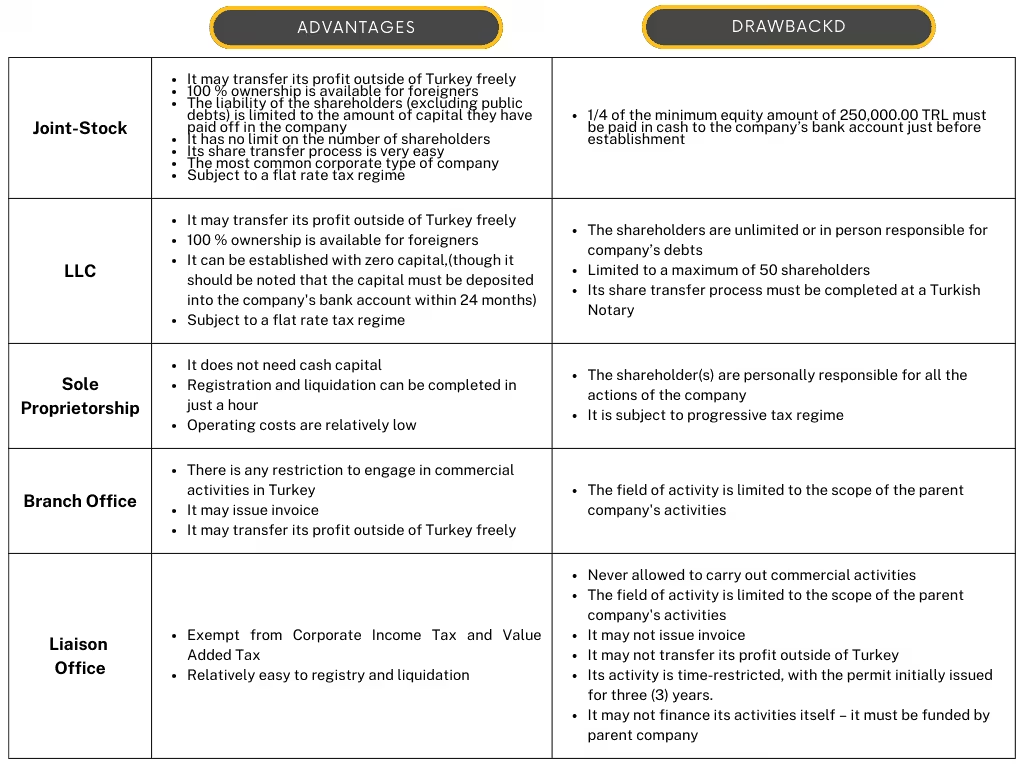
1. Joint Stock Company (JSC)
- Structure: Suitable for larger and more corporate businesses, a JSC is divided into shares. Shareholders’ liability (excluding public debts) is limited to their capital investment.
- Capital Requirement: Minimum capital is 250,000 TL, with 1/4 paid in cash to the company’s bank account before establishment. The remaining amount must be paid within 24 months.
- Benefits: No upper limit on the number of shareholders, preferred by banks and insurance companies, easier share transfers, and shares may be listed on the stock exchange.
Click the link for more info about JSC in Turkey
2. Limited Liability Company (LLC)
- Structure: Can have 1 to 50 shareholders.
- Capital Requirement: Minimum capital is 50,000 TL, payable within 24 months.
- Benefits: 100% ownership available for foreigners, immediate establishment with zero capital (to be deposited later), common type of equity company in Turkey.
- Responsibilities: One shareholder must be a manager; other directors can be from shareholders or non-shareholders.
Click the link for more info about LLC in Turkey
3. Sole Proprietorship Company
- Structure: Owned and operated by a single individual responsible for all debts and liabilities.
- Benefits: No cash capital required, quick registration and liquidation, low operating costs.
- Drawbacks: Owner is personally responsible for all actions and debts, subject to progressive tax regime.
4. Branch Office
- Structure: Allows foreign companies to engage in commercial activities in Turkey without establishing a new entity.
- Benefits: No minimum capital requirement, can commence business immediately, can issue invoices and transfer profit outside of Turkey without WHT tax.
- Drawbacks: Limited to the parent company’s scope of activities.
Click the link for more info about Branch Office in Turkey
5. Liaison Office
- Structure: Set up by foreign investors for research activities without commercial engagement.
- Benefits: Exempt from corporate income tax and VAT, relatively easy registration and liquidation.
- Drawbacks: Prohibited from commercial activities, cannot issue invoices or transfer profits, time-restricted operations (initially three years, extendable).
Click the link for more info about Liaison Office in Turkey
Required Documents for Business Registration in Turkey
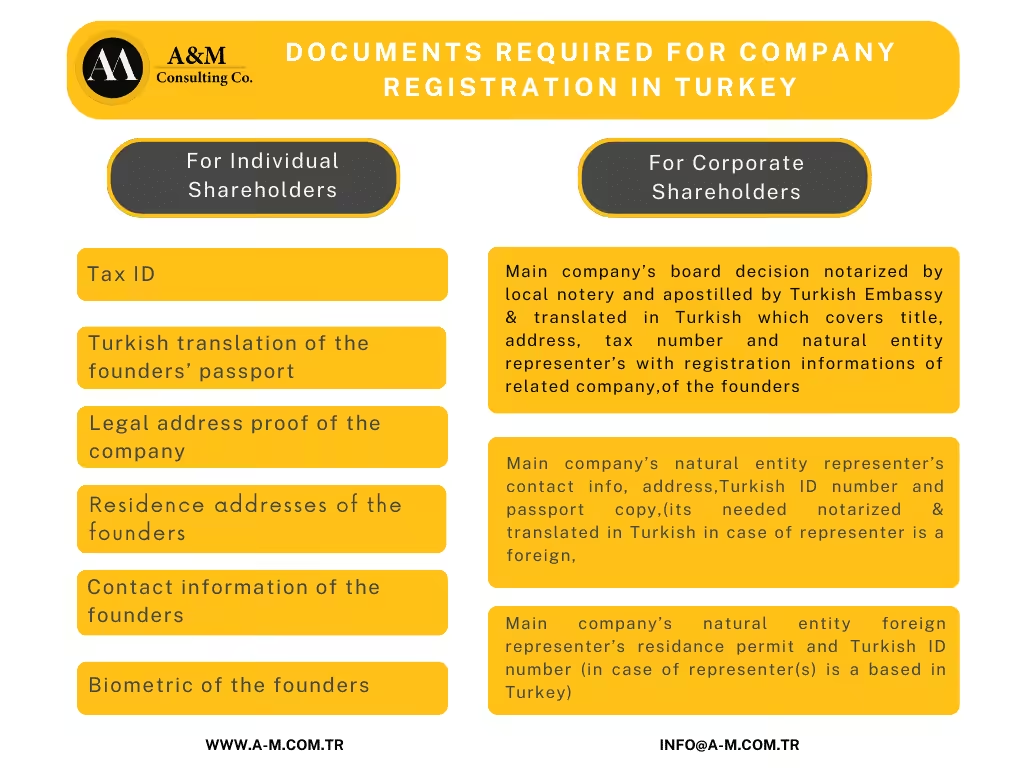
The required documents registering a company in Turkey differ based on whether the founders are individual shareholders or corporate shareholders. While the Turkey company registration process for individual founders is relatively simple and requires fewer documents, company formation in Turkey with corporate shareholders involves a more complex documentation procedure due to additional legal, tax, and compliance requirements. Understanding these differences is essential for a smooth and efficient company incorporation process in Turkey. Below, outlined the detailed document requirements for both individual and corporate founders to help you successfully register a company in Turkey.
- For Individual Shareholders:
- Power of Attorney – (Notarized and apostilled in your country of residence)
- Copy of the Founders’ Passports (Apostilled in your country of residence)
- Passport-sized photograph (for each founder)
- Turkish tax ID number (for each founder)
- Proof of Legal Address for the company (The virtual address is available)
- For Corporate Founders:
- Apostilled registration document of parent company(Certified registration document showing the current registry records of the parent company (must show directors, address and full name/title)
- Apostilled passport copy of the director(s) of parent company
- Apostilled corporate parent company resolution authorizing of Representer the establishment of the your Turkish entity.
- Proof of address for your Turkish entity (The virtual address is available)
- Turkish tax ID number for parent company
- Turkish tax ID number for your Turkey Entity’s Representer
Comparison of Legal Entities in Turkey
Step-by-Step Corporate Registry Process in Turkey
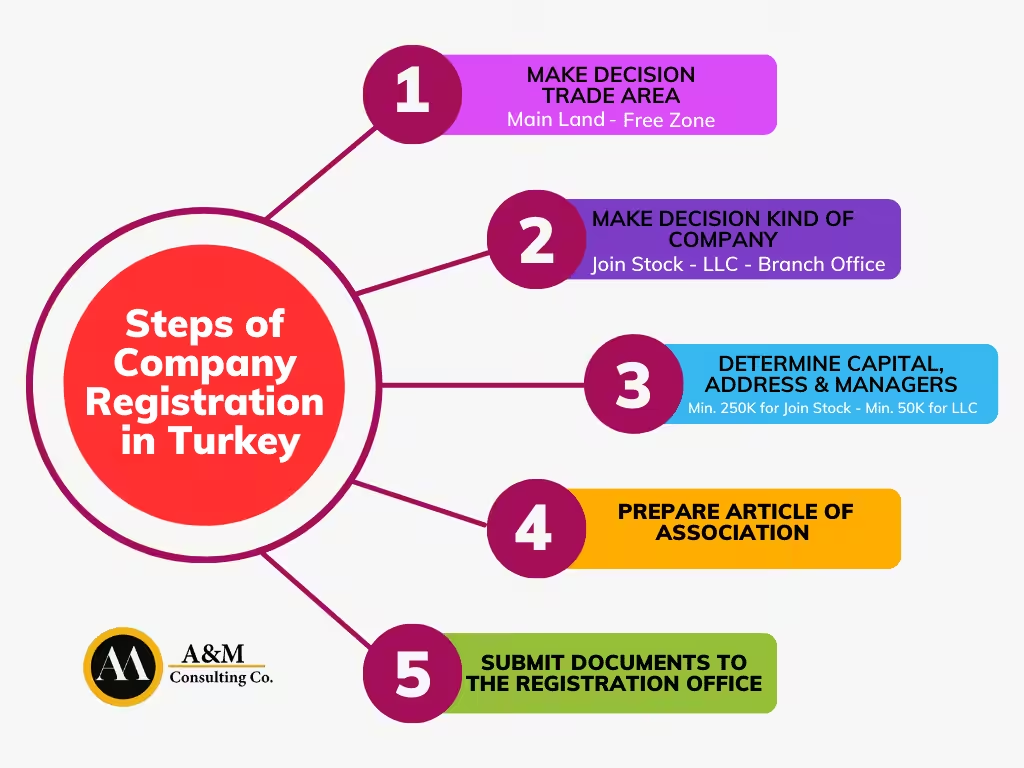
- First Step: Determine the Trade Area: Choose between mainland or free zones.
- Second Step: Choose the Company Type: Decide between LLC or JSC.
- Third Step: Decide on Managers and Share Capital Amounts:
- For JSC: Minimum 250,000 TL, with 1/4 paid before establishment.
- For LLC: Minimum 50,000 TL.
- Fourth Step: Prepare the Articles of Incorporation:
- Reserve company title.
- Sign a lease contract for the legal address.
- Obtain tax ID numbers for founders.
- Translate and notarize founders’ passports.
- Fifth Step: Submit Documents:
- Submit all required documents and pay registration fees.
- Register with the tax office.
- Obtain a notarized signature circular for managers.
Timeline and Costs
Estimated Timeline for Remote Registration
(Shareholders Abroad)
| Phase | Duration |
|---|---|
| PoA preparation at consulate + courier | 4-10 days |
| Document translation and notarization | 2-5 days |
| Tax ID and bank account opening (JSCs) | 2-5 days |
| MERSIS and Trade Registry processing | 5-10 business days |
| Total (typical) | 3-4 weeks |
*For shareholders physically present in Turkey: 1-3 days*
Estimated Costs
(LLC – Mainland, via Professional Consulting Firm)
| Service | Cost (EUR) |
|---|---|
| Company formation services (including legal fees, notary, registry) | Approximately €2,500 + VAT |
| Virtual office (annual) | €750 + VAT |
| Bank account opening service | €500 per bank |
| Accounting and tax consultancy (monthly retainer) | €500 + VAT / month |
| Total one-time setup (approximate) | €3,500 – €4,000 + VAT |
Note: Minimum capital (50,000 TL for LLC) is not an expense; it remains company equity. For JSCs, 25% of capital must be deposited before registration.
Management of the Companies in Turkey
You can manage the company yourself or appoint a director. According to the Turkish Commercial Code, at least one manager is required, who can be a shareholder or an external appointee. If the manager is a legal entity, a natural person must be appointed to represent it. Foreign managers require a work permit.
Duties and Responsibilities of Managers
Managers are responsible for:
- Preparing financial statements and annual reports.
- Executing general assembly meeting decisions.
- Establishing the accounting system and conducting audits.
- Notifying the commercial court if the company is in debt.
Post-Incorporation Tasks (Critical for Legal Compliance)
1- Register with the Tax Office
After completing the incorporation process, the first thing you need to do is register your company for tax purposes at the tax office associated with your company’s address. Although this process is usually done automatically by the trade registry office, it is recommended to verify and correct it if necessary. It is also advisable to obtain a user code and password for online transactions.
2- Register with the Social Security Institution (SGK)
The second step after incorporation is to register with the social security center associated with your company’s address and obtain an employer registration number, even if you do not employ any workers. This process is typically handled automatically by the trade registry office, but it is recommended to ensure that your workplace hazard class is correctly determined.
3- Hire a Certified Public Accountant (CPA) or Accountant
Sign a contract with a licensed CPA or accountant to handle your company’s accounting and tax-related matters. This is mandatory for ensuring your company’s legal compliance.
4- Open a Bank Account
It is recommended to open at least one bank account to manage the initial capital deposit during the incorporation phase, as well as post-incorporation tax and social security premium payments, and to efficiently handle your company’s operational payment and collection processes.
5- Apply for E-Ledger, E-Invoice, and Fiscal Stamp
As part of the digital transformation, it is mandatory to apply for e-ledger and e-invoice. To complete these applications, you need to obtain a fiscal stamp.
6- Prepare a Signature Circular
A signature circular is a notarized document that identifies the official representatives of a company and their authority to act on behalf of the company. This document is used to certify the authority of individuals who will conduct transactions on behalf of the company in official and legal processes. Examples of its use include:
- Opening bank accounts on behalf of the company.
- Submitting applications to official institutions.
- Signing contracts on behalf of the company.
- Handling tax office procedures.
- Conducting customs and international trade transactions.
7- Obtain a Company Stamp
Have a company stamp made to identify and approve your company’s official documents. Primary uses include:
- Standardizing company information on official documents.
- Verifying the company’s identity on paper invoices and receipts.
- Adding formality to legal and commercial contracts and processes.
- Supporting official transactions alongside signatures.
8- Apply for E-Notification
It is mandatory to apply for e-notification with the relevant institutions to receive legal notifications from the tax office and SGK.
9- Apply for Licenses & Permits
Depending on your field of activity, you are required to obtain a standard business license from the local municipality. Operating without a license may result in fines, legal actions, or even closure. Some sectors require additional special licenses beyond the standard business license. For example:
- Real Estate: Businesses involved in real estate brokerage and property valuation must obtain a Property Valuation Expertise Certificate and a Real Estate Broker License.
- Healthcare: Businesses operating aesthetic, oral and dental health, and hair transplant centers must obtain a Health Facility License from the Ministry of Health to operate legally.
- Construction: To engage in construction, some local or metropolitan municipalities require a Contractor Certificate from the Ministry of Environment and Urbanization.
- Telecommunications: Businesses operating in telecom, GSM, and VoIP must obtain a GSM Operating License or Fixed Line License from the Information and Communication Technologies Authority to operate legally.
- Import/Export: Businesses engaged in international trade may require additional customs licenses and permits.
- Tourism: Hotels, tour operators, and other tourism-related businesses must obtain a Tourism Operating Certificate or TURSAB Certificate from the Ministry of Culture and Tourism.
- Manufacturing/Production: Manufacturing companies must obtain a Production Facility License under the Environmental Law, which includes at least one of the following: air emissions, noise pollution, wastewater discharge, and deep-sea pollution.
FAQs About Company Registration in Turkey
If you’d like to turn your new business into a company in Turkey or decided to extened your existing business, you’ll be relieved to know the Company Formation Process in Turkey is quick ,
You may do company formation as ON-LINE yourself or by prox, But, due to the complexity of the system and the need for a wet signature to ensure registration, we recommend that you get professional support from a Turkish Accountant or Turkish CPA.
Company registration has been doing on MERSIS system as on-line but we highly recommend to get professional service from a Turkish Accountant or Turkish CPA to avoid any legal problem due to both its complicated structure and some bureaucratic procedures.
Individual Shareholders must provide followings to incorporate a company in Turkey;
• In Turkish translation of passport which is approved by Notery in Turkey or appostiled Turkish Consulate where you based in
• A biometric of founders
• A GSM no & e-mail address of founders
• A Power of Attorney which is approved by Notary in Turkey or apostilled Turkish Consulate where you based in
• Tax number of company and founders
• Rent agreement of company
• Residance address of founders
The registration process typically takes between 1 to 2 weeks, depending on the completeness of the documentation and the efficiency of the local Trade Registry Office.
If you form your company through A&M Consulting Co. the application takes around hour to complete.
Yes, foreign individuals and entities can own 100% of a company in Turkey. There are no restrictions on foreign ownership.
As per Turkish trade code the capital must be paid off within 24 month for all company types, it may be paid off in once or can be paid in pieces,
But; there is a significant point for Joint Stock Company type what is 1/4 of the capital have to be paid to bank account by shareholders just before registration of it.
Yes it is
Almost for all activities the virtual office is available but do not forget that the physical office is mondatory for productors and some other sectors.
It costs about EUR 3,500 to form a company through A&M Consulting Co. This price includes the bank account.
That is our turn-key price and there are no hidden or any other additional costs to form a ready-to-trade a company with us.
Every company is legally required to have a accountant or CPA who are authorized by Turkish Finance Ministry which bookkeeps of company’s official books and declerates tax & SSI decleration forms, so without these a company cannot be active and maintained in Turkey
You can start trading as soon as your company has been formed. The system automatically sends your registration informations also to the tax office.
Once you have get your Trade Registration Certificate & Tax Signboard, it means that your company exists anymore and ready to trade and issuing invoice.
No, you must get the work or residence permit
No it isn’t necessary
You can set up and manage your company remote via an Turkish CPA who has Power of Attorney behalf on you.
The liquidation process is not as simple and fast as establishment, as it is a rather complex and long process, it must be carried out under the guidance of a Turkish Accountant or Turkish Financial Advisor, it takes at least 6 months.
If your company has a paid-in capital of at least 100.000,00 TRL and employs at least 5 local workers, you can apply for a work permit in Turkey,
For more information, you can check out our article on Turkey Work Visa
Corporate Income Tax (CIT): The normal corporate tax rate in Turkey is 25% as of July 2023.
Provisional Tax: Provisional tax is calculated at 25% on earnings every three months within the 12-month taxation year, and it is deducted from the annual tax(CIT)
Value-Added Tax (VAT): Most products and services are subject to the regular VAT rate of 20%. Basic food items are subject to 1% VAT, while there are also 8% and 10% VAT rates applicable in Turkey.
Income Tax: Income tax is levied on earnings by sole proprietorship companies and employees. Employers are responsible for calculating and paying the income tax of their employees. It is a progressive tax, ranging from 15% to 40%.
Stamp Tax: Stamp tax is calculated on all kinds of contracts and employee wage slips. It has a variable rate depending on the type of document. Employers are responsible for calculating and paying stamp tax for their employees.
Withholding Tax (WHT): Withholding tax is calculated at least 20% on workplace rent and wage payments.
For more information, you can take a look at our article on Taxation in Turkey
Turkish government offers several employment incentives & tax reductions . Incentives and tax reductions generally cover the IT and manufacturing sectors, Technology Development Zones and Free-Zone companies. Subsidies for research and development activities. Employment incentives are aimed at young, female skilled workers
LTD – LLC Company
In Turkey, you can register various types of companies, including:
- Limited Liability Company (LLC)
- Joint Stock Company (JSC)
- Branch Office
- Liaison Office
- Commandite Company
- Collective Company
In Turkey, you can register various types of companies, including:
- Limited Liability Company (LLC)
- Joint Stock Company (JSC)
- Branch Office
- Liaison Office
- Commandite Company
- Collective Company
The process generally involves the following steps:
- Drafting the company’s Articles of Association.
- Depositing a percentage of the capital in a bank account for JSC type
- Registering the company with the Trade Registry Office.
- Obtaining a tax identification number.
- Registering with the Social Security Institution.
- Notifying the relevant local municipality.
Key documents include:
- Articles of Association.
- Passports of foreign shareholders and directors.
- Proof of address for shareholders and directors.
- Bank receipt for capital deposit for JSC type
- Signature declarations of the directors.
No, you do not need a local partner or director to register a company in Turkey. However, having a local representative can be beneficial for administrative purposes.
Yes, certain industries such as banking, insurance, telecommunications, health, property brokers and pharmaceuticals require special licenses and regulatory approvals.
Yes, after registering your company, you can open a corporate bank account in Turkey. Most banks require the company’s registration documents, tax identification number, and personal identification of the directors and shareholders.For more detail, look at our article about Corporate Bank Account in Turkey
Companies must:
- File annual financial statements.
- Submit quarterly and annual tax returns.
- Maintain accurate and up-to-date accounting records.
- Register any changes in company structure with the Trade Registry.
A well-equipped Turkish Accountant will provide you with these
Setup Your Business in Turkey with A&M Consulting Co.
Turkey offers a transparent, investor-friendly, and well-regulated legal framework for foreign and local investors seeking to establish a commercial presence through company registration. Whether setting up a subsidiary, branch, or liaison office, Turkish company law provides clear procedures, predictable timelines, and alignment with international business standards. To ensure a smooth incorporation process, it is essential that all legal, tax, and regulatory requirements are fulfilled accurately and in full compliance with Turkish legislation.
With the appropriate professional guidance, investors can efficiently navigate the company formation process before the Trade Registry Offices, tax authorities, social security institutions, and other relevant public bodies. Proper structuring at the incorporation stage is critical, as it directly impacts tax exposure, VAT compliance, profit repatriation, and long-term operational flexibility.
A&M Consulting Co. is widely recognized for its expertise and reliability in assisting investors with company registration and market entry in Turkey. Our services cover the entire incorporation lifecycle, including legal structuring advisory, preparation of incorporation documents, trade registry filings, tax and VAT registrations, e-invoicing setup, and post-incorporation compliance.
We support entrepreneurs, corporates, and international investors in establishing fully compliant and operational entities tailored to their business objectives.
You may contact our experienced consultants directly via email or by completing the contact form on our website to receive tailored guidance for your Company Registration in Turkey.
DISCOVER OUR SERVICES:
- Company Registration in Turkey
- Tax Services
- Accounting & Bookeeping Services
- HR & Payroll Services
- Business Consultancy for Turkey
- Social Security Registration
- Virtual Office & Legal Address in Turkey
- Turkish Citizenship
- Turkey Work Visa
- Turkiye Tech Visa
- Establishment of Association in Turkey
- Foundation Registration in Turkey
- Company Winding Up in Turkey