

Summarize this article with AI
If you are planning to establish or expand a company in Turkey, working with a reliable accounting firm in Turkey is not just a regulatory requirement — it is a strategic decision. The Turkish tax system is detailed, compliance-driven, and highly formalized. Proper accounting support ensures not only legal conformity but also financial clarity and operational stability.
In this guide, we explain how accounting firms operate in Turkey, what services they provide, and how foreign investors can select the right professional partner.
The accounting profession in Turkey is governed by strict rules and regulations. Professionals operate under the authority of the Union of Chambers of Certified Public Accountants of Turkey (TÜRMOB) . Businesses will primarily encounter two main professional titles:
Certified Public Accountant (CPA – SMMM): These professionals handle the day-to-day bookkeeping, prepare tax returns, share transfer, capital increasing, as well as address changing and compile financial statements for businesses.
Sworn-in Certified Public Accountant (SWORN CPA – YMM): These professionals have broader authorities, including certifying books, providing consultancy on matters subject to certification, and representing taxpayers during tax inspections.
The working principles of these professionals are regulated by the Turkish Commercial Code (TCC), the Tax Procedure Law (TPL) , and the Turkish Accounting Standards (TAS) , which are set by the Public Oversight, Accounting and Auditing Standards Authority (POA) . The fact that these standards are largely harmonized with the International Financial Reporting Standards (IFRS) simplifies financial reporting, especially for international companies.
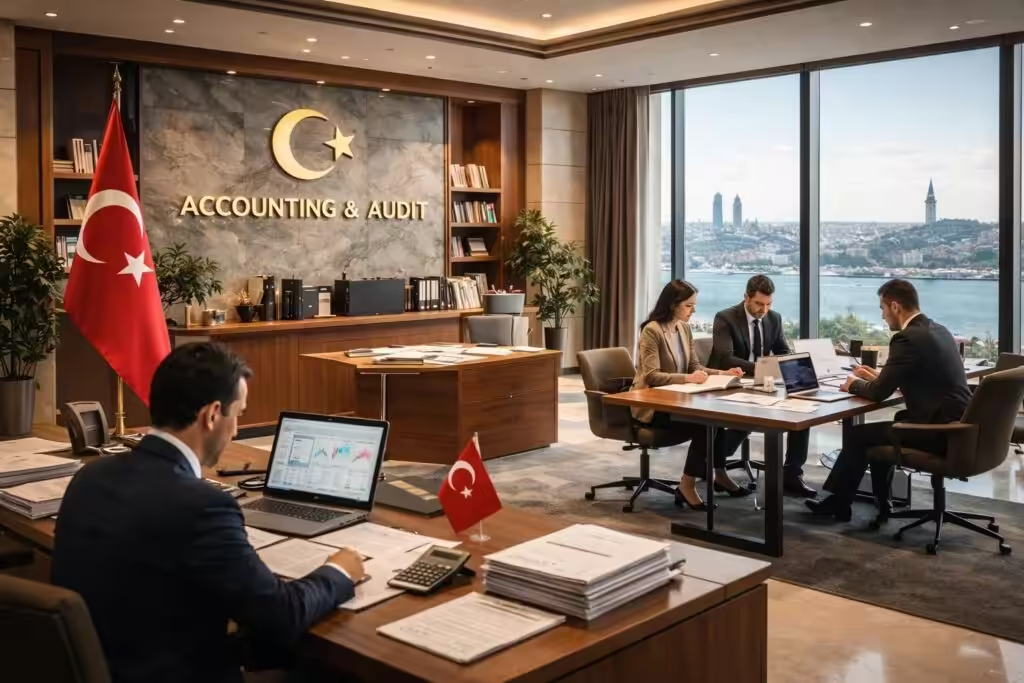
This is a fundamental obligation for all businesses. Firms provide services including maintaining monthly records in compliance with Turkish legislation, closing statutory books, performing year-end procedures, and preparing statutory financial statements such as the balance sheet and income statement.
Managing payroll in Turkey requires meticulous attention to complex labor laws, social security regulations, and income tax calculations. Accounting firms provide comprehensive payroll services to ensure accuracy and compliance. These services typically include:
Monthly payroll calculation and processing, including salaries, bonuses, and overtime.
Preparation and filing of all mandatory social security (SGK) premium declarations.
Withholding tax calculations and related declarations.
Management of employment exit transactions, severance pay calculations, and annual leave tracking.
Handling of work permits for foreign employees, ensuring full compliance with immigration laws.
The Turkish tax system is complex, encompassing numerous elements like corporate tax, income tax, value-added tax (VAT), withholding tax, and stamp duty. Professional firms provide the following support in this area:
Tax Compliance and Filing: Accurate and timely preparation and submission of all monthly and annual tax returns to the relevant tax offices, ensuring full compliance with digital applications such as e-Invoice, e-Ledger, and e-Archive.
Strategic Tax Planning: Helping companies optimize their tax burden while staying within the legal framework. This includes maximizing benefits from investment incentives, R&D deductions, free zone advantages, and double tax treaties.
Transfer Pricing: Preparing transfer pricing reports and fulfilling documentation requirements for companies with international transactions.
With the Turkish government’s push toward a fully digital economy, compliance with electronic applications is mandatory for most businesses. Accounting firms guide their clients through this “E-Transformation” process, ensuring seamless integration with the Revenue Administration’s systems. Key services include:
e-Invoice (e-Fatura) Integration and Management: Assisting businesses in obtaining the necessary permissions to issue e-Invoices, selecting the right software or portal solution, and managing the electronic dispatch and storage of invoices.
e-Ledger (e-Defter) Preparation and Submission: Handling the monthly preparation, digital signing, and submission of statutory e-Ledgers to the GIB (Revenue Administration) within the legal deadlines, eliminating the need for physical book printing and approval.
e-Archive (e-Arşiv) Management: Managing the process for invoices issued to non-subscribers, ensuring they are stored correctly and made available to customers.
e-Declaration (e-Beyanname) Filing: Preparing and securely submitting all tax declarations (VAT, Corporate Tax, Withholding, etc.) electronically via the official interface.
Independent audit is a legal requirement for companies of a certain size. Through independent audit firms authorized by the POA, accounting firms offer:
Statutory Independent Audit: Auditing the accuracy and compliance of companies’ financial statements with regulations and factual reality.
Voluntary Audits and Special Purpose Reports: Conducting financial reviews, due diligence, and special reporting for situations such as mergers, acquisitions, or investor requests.
Firms accompany their clients on their growth journey by providing critical support for corporate changes and legal compliance. Services offered in this scope include:
Company Formation and Structuring: Assisting entrepreneurs looking to invest in Turkey by selecting the most suitable company type (Joint-Stock, Limited, etc.), drafting articles of association, and managing all applications before the trade registry and tax authorities.
Amendments to the Articles of Association: Managing all legal and administrative procedures for critical corporate changes, including:
Address Changes: Handling the official notifications to the trade registry and tax office when relocating your business.
Share Transfers: Guiding companies through the complex process of transferring shares, ensuring compliance with the Turkish Commercial Code and tax regulations.
Capital Increases: Managing the entire process of increasing share capital, from board resolutions and preparation of legal documents to filing with the relevant authorities.
Mergers and Acquisitions (M&A): Providing consultancy on financial due diligence, company valuation, and post-acquisition integration processes.
Risk Management and Internal Control: Helping companies identify their operational and financial risks and establish effective internal control systems.
While the comprehensive services listed above are essential for any business, foreign investors operating in Turkey face a unique set of challenges. The intersection of local legislation, language barriers, and cultural business norms creates a landscape that is difficult to navigate alone. A specialized accounting firm acts as more than just a financial advisor; it becomes your local partner, interpreter, and strategic guide.
Here is why partnering with the right firm is critical for international success in Turkey:
This is often the first and most significant hurdle. Official correspondence from tax offices, social security institutions, and trade registries is conducted exclusively in Turkish. Misinterpreting a single official letter or regulation can lead to missed deadlines, incorrect filings, and significant financial penalties. A specialized firm with multilingual staff bridges this gap entirely, ensuring you understand your obligations and that your communications with the state are handled professionally and accurately.
Turkish tax and commercial law is notoriously dynamic, with frequent changes in regulations, tax rates, and reporting formats. For a foreign investor focused on core business operations, keeping up with these changes is virtually impossible. A specialized accounting firm has a dedicated team whose sole job is to monitor this legislative flux. They ensure that your business remains 100% compliant, adapting your financial processes instantly to meet new requirements like updates to e-Invoice formats or changes in corporate tax law.
Foreign investors often structure their investments through holding companies in different jurisdictions. Specialized firms are experts in the regulations surrounding foreign direct investment. They provide crucial guidance on:
Capital importation: Ensuring funds are brought into Turkey through proper banking channels and registered correctly with the Central Bank.
Profit Repatriation: Managing the legal process of transferring dividends, royalties, or exit proceeds back to your home country in a tax-efficient and compliant manner, taking full advantage of Turkey’s extensive network of Double Taxation Treaties.
Debt vs. Equity Financing: Advising on the optimal financial structure for your Turkish subsidiary to minimize tax liabilities related to interest payments and thin capitalization rules.
Turkey offers a variety of powerful investment incentives, such as R&D tax breaks, regional development subsidies, and free zone advantages. However, these incentives are often complex to apply for and even more complex to maintain. A local, specialized firm knows exactly which incentives your specific project qualifies for and can manage the application and annual reporting process to ensure you continue to receive these significant financial benefits. They also help localize your financial reporting to meet both Turkish statutory requirements and your parent company’s international standards (IFRS, US GAAP, etc.).
Operating in an unfamiliar market comes with inherent risks. A specialized accounting firm provides a layer of protection by conducting regular internal audits, reviewing contracts for financial pitfalls, and ensuring your transfer pricing policies are bulletproof. This proactive approach to risk management protects you from unexpected tax assessments and legal disputes, allowing you to focus on growing your business with peace of mind.
In essence, for a foreign investor, a specialized accounting firm is the key that unlocks the Turkish market safely and efficiently, transforming bureaucratic complexity into manageable, strategic processes.
Within days of your company’s registration with the Trade Registry, several mandatory actions must be completed:
Mandatory Electronic Ledgers: For all companies incorporated after January 1, 2026, the Share Ledger and the General Assembly Meeting and Deliberation Ledger must be created, kept, and stored through the Electronic Commercial Ledger System (ECLS) . Upon registration with the trade registry, these ledgers are made available for use in electronic form simultaneously, without the need for a separate notary procedure .
Optional Electronic Ledgers: The Board of Directors’ Resolution Ledger can be kept in electronic form at the company’s discretion .
Other Statutory Books: Books such as the Journal, Ledger, and Inventory Book still need to be certified. The notary public who certifies these books will also notify the tax office of their certification .
Turkey’s tax system requires regular and accurate filings. The table below summarizes the core tax obligations for companies :
| Tax Type | Filing Frequency | Key Deadlines & Rates |
|---|---|---|
| Corporate Income Tax (CIT) | Annual | Rate: 25% (30% for financial institutions). Filed by the end of the 4th month following the fiscal year-end (e.g., by end of April for calendar year companies). |
| Temporary (Prepaid) Tax | Quarterly | Rate: Same as CIT (25%). Paid in advance to offset the annual CIT liability. Filed by the end of the month following each quarter. |
| Value Added Tax (VAT) | Monthly | Rates: 1%, 10%, or 20% depending on the product/service. Filed by the 26th day of the following month. |
| VAT 2 (Special VAT Return) | Monthly/Per Transaction | A specific VAT return used for transactions where the VAT liability is shifted to the buyer (reverse charge). This applies to certain services received from abroad or specific domestic transactions. Must be filed by the 26th day of the month following the transaction. |
| Withholding Tax | Monthly / Quarterly | Applies to salaries, rent payments to individuals, and certain professional fees such as freelancers. Filed monthly or quarterly by the 26th day of the following month. |
Selecting the right accounting firm is one of the most critical decisions you will make for your business in Turkey. The firm you choose will not only handle your financial compliance but will also act as a strategic advisor, potentially impacting your profitability, growth trajectory, and peace of mind. With hundreds of firms operating across the country—from global network affiliates to specialized local boutiques—making the right choice requires careful evaluation.
This section provides a practical framework to help foreign investors and local businesses alike choose the ideal accounting partner in Turkey.
Before you begin your search, take a step back and clearly define what you need. The right firm for a multinational corporation will be different from the right firm for a startup. Consider the following:
Business Stage: Are you a newly formed company needing help with basic bookkeeping and tax compliance, or an established business seeking advanced tax planning and audit support?
Business Size and Complexity: Do you have international transactions requiring transfer pricing documentation? Do you have multiple employees requiring complex payroll management?
Industry Specifics: Does your business operate in a regulated sector like finance, energy, or healthcare that requires specialized industry knowledge?
Future Plans: Are you planning to seek investment, merge with another company, or eventually exit the market? If so, you may need a firm with corporate finance and due diligence expertise.
Creating a checklist of required services (e.g., bookkeeping, VAT filing, payroll, e-Invoice management, audit support) will help you filter potential candidates effectively.
Once you have a clear understanding of your needs, evaluate potential firms against the following criteria:
A. Expertise and Credentials
Qualified Professionals: Ensure the firm employs certified professionals (SMMM or YMM) who are registered with TÜRMOB and have up-to-date knowledge of Turkish tax laws.
Industry Experience: Ask if they have experience working with businesses in your specific sector. A firm familiar with your industry will understand its unique challenges and opportunities.
International Expertise: For foreign investors, it is crucial to find a firm with proven experience serving international clients. They should understand cross-border issues, double tax treaties, and the challenges of operating in a foreign jurisdiction.
B. Services Offered
Comprehensive vs. Niche: Does the firm offer all the services you need under one roof, or would you need to coordinate with multiple providers? A full-service firm can provide seamless integration between bookkeeping, tax, payroll, and legal advisory.
E-Transformation Capabilities: Given Turkey’s mandatory digitalization, ensure the firm is fully proficient in e-Invoice, e-Ledger, e-Archive, and other e-Transformation applications. Ask about the software they use and how they ensure data security.
Language Capabilities: If you are a foreign investor, confirm that the firm has English-speaking (or other relevant language) staff who can communicate complex financial matters clearly and handle correspondence with authorities on your behalf.
C. Reputation and References
Client Testimonials: Request references from current clients, preferably those in a similar industry or situation. Reach out to them to ask about their experience with the firm’s responsiveness, accuracy, and proactive advice.
Online Presence and Reviews: Check the firm’s website, LinkedIn profile, and any online reviews. A professional online presence can be an indicator of their commitment to transparency and communication.
Network Affiliations: Is the firm a member of an international network like Nexia, Morison Global, BDO, or others? This can be particularly valuable for foreign investors who need coordinated support across multiple countries.
D. Communication and Responsiveness
Accessibility: How easy is it to reach your assigned account manager or partner? Do they respond to emails and calls promptly?
Proactive Communication: Do they simply wait for you to ask questions, or do they proactively inform you about regulatory changes, upcoming deadlines, and potential tax savings opportunities?
Reporting and Transparency: How will they communicate your financial status? Do they provide regular, clear reports that you can understand, even without a deep accounting background?
E. Technology and Infrastructure
Software Used: What accounting software do they use? Is it cloud-based, allowing you secure, real-time access to your financial data?
Data Security: Ask about their data security protocols. How do they protect your sensitive financial information from breaches or loss?
Integration Capabilities: Can their systems integrate with your own internal systems or the software you use for operations?
F. Fee Structure and Value
Transparent Pricing: Request a clear, detailed proposal outlining all fees. Understand what is included in the base fee and what might be considered an extra charge.
Value for Money: The cheapest option is rarely the best. Consider the value they provide—not just in compliance, but in strategic advice, risk mitigation, and time saved. A slightly more expensive firm that proactively saves you money on taxes and prevents penalties is a better investment.
Billing Method: Do they charge a fixed monthly fee, an hourly rate, or a project-based fee? Choose a structure that aligns with your business model and budget.
When you have shortlisted a few firms, schedule meetings (virtual or in-person) to ask these key questions:
“Can you describe your experience with businesses in my industry and of my size?”
“Who will be my primary point of contact, and how will we communicate?”
“How do you stay updated on changes in Turkish tax legislation, and how do you inform your clients?”
“What is your process for ensuring compliance with e-Transformation requirements (e-Invoice, e-Ledger)?”
“Can you provide references from two or three current clients with similar needs to mine?”
“How do you handle potential conflicts of interest?”
“What is your fee structure, and what services are included? Can you provide a sample engagement letter?”
Be cautious of firms that exhibit any of the following warning signs:
The “Cheap Wage” Trap (Lowball Pricing): Be extremely wary of firms offering fees significantly below the market average. In the accounting profession, you often get what you pay for. Extremely low fees usually indicate that the firm will cut corners to maintain profitability. This might mean assigning inexperienced junior staff to your account, spending minimal time on your filings, or using outdated systems. While you may save a small amount each month, the cost of a single missed deadline, incorrect filing, or poorly managed tax inspection resulting from subpar work can be tens of thousands of liras in penalties—far outweighing any initial savings. Quality accounting is an investment in your company’s safety, not an expense to be minimized.
Impersonation of a Certified Public Accountant Through Unauthorized Signature Use: This is a particularly insidious form of fraud where an individual who is not a registered certified public accountant (SMMM or YMM) illegally uses the name, signature, or credentials of a legitimate, registered professional. This can happen in several ways:
Ghost Accounting: An unqualified individual handles your finances but files documents under the stolen identity of a real CPA, leaving you with no actual professional oversight.
Credential Leasing: A firm may employ unqualified staff who perform the work, while a registered CPA simply “lends” their signature and stamp without reviewing any documents. This is a serious violation of professional ethics and Turkish law.
Fake Credentials: In the worst cases, the individual may present themselves as a CPA using forged documents or claiming membership in TÜRMOB without being registered.
How to protect yourself: Always verify your accountant’s credentials directly on the official TÜRMOB website. Ask to meet the specific CPA who will be signing your declarations. Ensure that the person whose name appears on your filings is actually involved in reviewing and approving your financial documents. If a firm is reluctant to facilitate this introduction or if the named CPA is perpetually “unavailable,” or if its fee is so low this this is a major warning sign. Relying on an impersonator means your filings are effectively unsigned in the eyes of the law, leaving you with no legal protection and exposing you to severe penalties, including the invalidation of all your tax declarations.
Lack of Transparency: Vague fee structures, reluctance to provide references, or unwillingness to explain their processes in detail are major red flags.
Poor Communication: If they are slow to respond or difficult to reach during the sales process, this will likely worsen once you are a client.
Overpromising: Be wary of firms that make grandiose promises about tax savings that seem too good to be true. They probably are.
Language Barriers: If clear communication is difficult during your initial meetings, it will be a persistent challenge throughout your relationship.
After your interviews, compare your shortlisted firms based on the criteria above. Consider not just their technical competence but also your comfort level with their team. You will be sharing sensitive information and relying on their advice, so trust and rapport are essential.
The right accounting firm should feel like a true partner—one who understands your goals, communicates clearly, and proactively helps you navigate the complexities of doing business in Turkey. Take your time, do your due diligence, and choose a firm that will support your success for years to come.
Turkey has one of the most advanced digital banking infrastructures in its region:
Instant transfers (FAST system)
Mobile banking adoption above EU average
E-government integrations
E-invoice and e-ledger integration with banks
This allows remote financial management once the account is opened.
A Turkish Accounting Firm plays a critical role in ensuring that businesses operating in Turkey remain fully compliant with tax legislation, financial reporting standards, and regulatory requirements. With deep knowledge of the Turkish Tax Procedure Law, Corporate Tax Law, VAT regulations, and Social Security legislation, professional accounting firms provide the technical expertise necessary to safeguard your operations and support sustainable growth.
Whether you are establishing a new company, managing a branch office, or expanding an existing investment, working with a qualified Certified Public Accountant (SMMM) in Turkey is not merely an administrative necessity—it is a strategic decision. Proper bookkeeping, accurate tax filings, payroll compliance, and timely reporting directly impact your company’s financial stability and risk exposure.
A&M Consulting Co. is a reputable Accounting Firm in Turkey, officially registered and accredited with TURMOB (Union of Chambers of Certified Public Accountants of Turkey) and ISMMMO (Istanbul Chamber of Certified Public Accountants). Our firm is recognised for its strong commitment to professional ethics, regulatory compliance, and client-focused service delivery.
We provide reliable and cost-effective accounting services to individual entrepreneurs, SMEs, multinational corporations, and foreign investors operating in Turkey. Our services include:
DISCOVER OUR SERVICES:
You can reach out to our experienced consultans via email or by filling out the Contact Form on our website’s contact page
Yes, absolutely. According to Law No. 3568 on Certified Public Accountancy, every registered company in Turkey is legally required to appoint a licensed Certified Public Accountant (SMMM – Serbest Muhasebeci Mali Müşavir) . The CPA is officially responsible for recording financial transactions, preparing and submitting tax returns, and certifying the company’s official ledgers. Operating without a CPA is illegal and can expose your company to fines, penalties, or even suspension of activities .
This is a common point of confusion. A Certified Public Accountant (SMMM) is a licensed professional, registered with the state (TÜRMOB), who has the legal authority to represent your company before tax authorities and submit official tax declarations . Their appointment is mandatory by law. An internal accountant, on the other hand, is an employee hired by the company to manage day-to-day financial operations such as processing invoices, calculating salaries, and tracking expenses. They have no legal authority to file official returns with the government .
Yes, you can manage almost all processes remotely. Through a limited Power of Attorney (PoA) , you can authorize your accounting firm to handle up to 95% of your tax and legal procedures without your physical presence in Turkey . Professional firms use cloud-based systems and digital tools, allowing you to access your financial data and monitor compliance from anywhere in the world .
Turkish companies face several recurring tax obligations. The core taxes include:
Corporate Income Tax (CIT): An annual tax on corporate profits, currently at a standard rate of 25% (30% for financial institutions) .
Temporary (Prepaid) Tax: Paid quarterly in advance to offset the annual CIT liability .
Value Added Tax (VAT / KDV): A monthly tax on goods and services, with rates of 1%, 10%, or 20% depending on the product/service .
Withholding Tax (Stopaj): A monthly tax deducted from salaries, rent payments to individuals, and certain professional fees .
Turkey’s tax authority has implemented a comprehensive digital transformation. The mandatory systems include:
e-Invoice (e-Fatura): Electronically issuing, transmitting, and storing invoices .
e-Ledger (e-Defter): Preparing and submitting statutory ledgers in a digital, signed format .
e-Archive (e-Arşiv): Electronically issuing invoices to customers who are not mandatory e-Invoice users .
A qualified accounting firm will manage your enrollment and compliance with all these systems
Selecting the right firm is a strategic decision. Key factors to consider include:
Expertise with Foreigners: Does the firm have proven experience serving international clients and understanding cross-border issues like double tax treaties?
Language Capabilities: Do they offer fluent English (or your language) support to ensure clear communication?
Service Scope: Do they offer comprehensive, end-to-end services (accounting, tax, payroll, e-transformation) under one roof?
Technology: Do they use modern, cloud-based systems for real-time reporting and data security?
Reputation: Can they provide references and do they have a track record of ethical, proactive service?
Yes, a reputable firm can significantly assist with this process. Opening a bank account as a foreigner can be challenging due to banks’ strict compliance procedures. An established accounting firm with strong, professional relationships with major Turkish banks can facilitate the process, prepare the necessary documentation, and increase your chances of a smooth and successful account opening .
Fees depend on company size, transaction volume, and payroll complexity. For small companies, monthly fees typically vary based on:
Number of invoices
Number of employees
Industry risk classification
Reporting requirements
Custom pricing is common for foreign-invested companies.
Yes. Many firms provide company incorporation services, including:
Drafting articles of association
Trade Registry registration
Tax office registration
E-invoice and e-ledger activation
Social security registration
Yes. Licensed CPAs are authorized to represent clients before tax authorities, prepare responses to official notices, and manage audit processes.
Bookkeeping involves recording transactions and preparing tax declarations.
Financial advisory includes tax planning, structuring, cost optimisation, and strategic financial guidance.
Accountants share professional responsibility for filings they submit. However, ultimate tax liability remains with the taxpayer (the company).
To protect yourself from ghost accountant fraud in Turkey, you must take these proactive steps:
Verify Credentials: Check the accountant’s registration on the official TÜRMOB website to ensure they are licensed and authorized to practice.
Meet the Signing CPA: Insist on meeting the specific CPA who will be responsible for your filings. Evasiveness or unavailability is a major red flag.
Maintain Signature Control: Request a copy of your tax returns signed by an authorized CPA
Request an Engagement Letter: Work only with firms that provide a detailed, written contract outlining services, fees, and responsibilities.
By taking these steps, you become an informed partner and significantly reduce your risk of fraud.


WhatsApp Us