

Summarize this article with AI
Turkey has rapidly become one of the most accessible jurisdictions for international entrepreneurs, thanks to its fully digital company registration system known as MERSIS (Central Registry Record System). For foreign investors looking to establish a presence in this strategic market connecting Europe and Asia, the process is now more streamlined than ever—and remarkably, you can complete almost the entire process without ever setting foot in Turkey .
This guide provides a comprehensive walkthrough of the online company registration process in Turkey, detailing requirements, costs, timelines, and practical considerations for foreign business owners.
Turkey offers several compelling advantages for foreign investors. The country’s Foreign Direct Investment Law guarantees equal treatment—foreign investors enjoy the same rights and obligations as Turkish citizens . You can establish a 100% foreign-owned company without needing a local Turkish partner in most sectors, and there are no restrictions on nationality for company owners or directors .
The strategic location provides access to multiple markets, while the young, well-educated workforce offers competitive labor costs. Additionally, the Turkish government has made significant investments in digital infrastructure, transforming what was once a bureaucracy-heavy process into an efficient, transparent online system .
The cornerstone of Turkey’s digital transformation in business registration is MERSIS (Merkezi Sicil Kayıt Sistemi), the Central Registry Record System. This electronic platform allows you to submit your company’s articles of association and other required documents online, significantly reducing the time and complexity of the registration process .
Through MERSIS, you can:
Check and reserve your proposed company name
Submit your articles of association electronically
Track your application status
Receive your company’s identification number
This digital-first approach means that much of the paperwork can be completed from anywhere in the world, though certain documents still require notarization and physical submission to local authorities .
Before beginning the online registration process, you must decide on your company type. While Turkey offers several business structures, two forms dominate for foreign investors:
Minimum capital: 50,000 Turkish Lira (approximately $1,250 USD)
Shareholders: 1 to 50 individuals or legal entities
Best for: Small and medium-sized enterprises, startups, and most foreign investors
Capital payment: Can be paid within 24 months of establishment (no upfront deposit required for registration)
Minimum capital: 250,000 Turkish Lira (approximately $5,500 USD)
Shareholders: Minimum 1 shareholder (can be individual or legal entity)
Best for: Larger businesses, companies planning to go public, or those seeking complex share structures
Capital payment: At least 25% must be deposited before registration
For the vast majority of foreign entrepreneurs, the LLC structure is the recommended choice due to its lower capital requirements, simpler governance structure, and operational flexibility .

To register a company in Turkey, you will need to prepare the following documents. Attention to detail here is critical, as incomplete or improperly prepared documents are the most common cause of delays.
Power of Attorney (PoA): A notarized document authorizing your Turkish representative to act on your behalf—this is the key to remote registration
Passport copy: The first page of your passport, notarized and translated into Turkish
Passport photos: Professional headshot photos
Tax identification number: A “potential tax ID” obtained from the local tax office (your representative can handle this)
Proof of address: Utility bill or bank statement (translated and notarized)
Certificate of good-standing: Proof that the company is operational in its home country
Certificate of registration: Official incorporation records from the home country’s chamber of commerce or court
Board resolution: A decision from the shareholder company’s governing body authorizing the Turkish establishment
Signatory circular: Proof of representation power for authorized signatories
Any document originating outside Turkey must be properly authenticated. If your country is a signatory to the 1961 Hague Convention, you simply need an Apostille stamp on your documents. For non-Hague Convention countries, documents must undergo consular legalization at the Turkish embassy or consulate .
After apostille or legalization, all foreign documents must be:
Translated into Turkish by a sworn translator in Turkey
Notarized by a Turkish notary public
This two-step authentication process ensures your documents are legally valid for use with Turkish authorities .
As a foreign investor, the most practical approach is to appoint a Turkish lawyer or consultant through a Power of Attorney (Vekaletname). This document, prepared at a Turkish consulate in your home country, authorizes your representative to handle all registration steps on your behalf .
To prepare your PoA:
Schedule an appointment at the nearest Turkish consulate
Bring your valid passport
Provide your planned company details (name options, business purpose, capital amount)
Your Turkish attorney will provide the specific Turkish text to be included
The consulate visit typically takes 30-60 minutes and costs $50-150. Once completed, courier the original PoA to your representative in Turkey .
Before proceeding with registration, your representative will obtain “potential tax identification numbers” from the local tax office for:
The company being formed
Each foreign shareholder
Each foreign director
This can be done remotely and is a prerequisite for opening a corporate bank account .
Your representative will draft the Articles of Association (Ana Sözleşme) in Turkish, outlining:
Company name and legal address
Business objectives and activities
Capital structure and share distribution
Management and representation provisions
Internal governance rules
Once drafted, this document must be notarized by a Turkish notary .
With all documents prepared, your representative will submit the online application through MERSIS. This includes uploading the notarized Articles of Association and entering all company information into the system. MERSIS will generate a temporary company identification number, which can be used for opening a bank account .
A corporate bank account must be opened in the company’s name. For Joint Stock Companies, at least 25% of the subscribed capital must be deposited before registration. For Limited Liability Companies, no capital deposit is required at this stage—the full amount can be paid within 24 months of establishment .
Remote bank account opening is now possible at several Turkish banks (including İş Bankası, Garanti BBVA, and TEB) through:
Video call identity verification
Attorney-assisted opening using your Power of Attorney
Digital document signing
However, not all banks offer this service, so your attorney’s guidance is essential .
Before final registration, you must pay 0.04% of your company’s capital to the Competition Authority’s account. This can be done at the Trade Registry Office’s pay office .
Your representative will submit the complete application package to the local Trade Registry Office, including:
Registration demand petition
Notarized Articles of Association
Notarized signature declarations
Bank receipt for capital deposit (for JSCs)
Competition Authority payment receipt
Establishment statement
Chamber of Trade registration forms
Upon approval (typically 5-10 business days), the Trade Registry Office will:
Issue your company registration certificate
Assign your official tax identification number
Notify the tax office and Social Security Institution automatically
Publish your company’s establishment in the Trade Registry Gazette (within 10 days)
Your representative will then:
Obtain the signature circular (imza sirküleri) from a notary
Certify the required legal books (General Journal, General Ledger, Inventory Book)
Register for VAT if applicable
Complete Chamber of Commerce registration
Yes—with one potential caveat. The entire company registration process can be completed without your physical presence in Turkey through a properly prepared Power of Attorney. Your Turkish representative can handle all filings, notarizations, and registrations on your behalf .
The one area that may require additional coordination is bank account opening. While many banks now offer remote account opening with video verification, some may still request an in-person visit. Your attorney can advise which banks are most accommodating for remote clients .
What you can do remotely:
Company registration
Trade Registry filing
Tax registration
Most corporate actions
Filing tax returns (through your accountant)
Hiring employees (through HR processes)
What may require in-person (but often has alternatives):
Some bank account openings (video call options exist)
Certain notarial acts (can be done via PoA)
Regulatory authority meetings (for licensed sectors)
| Phase | Duration |
|---|---|
| PoA preparation at consulate | 1-3 days |
| Courier delivery to Turkey | 3-7 days |
| Document translation and notarization | 2-5 days |
| Tax ID and bank account opening | 2-5 days |
| MERSIS and Trade Registry processing | 5-10 business days |
| Total (typical) | 3-4 weeks |
In urgent cases with all documents ready, registration can be completed in 1-2 weeks .
| Expense | Amount (USD) |
|---|---|
| Attorney/consultant fees | $1,500 – $3,000 |
| Notary and Trade Registry fees | $300 – $750 |
| PoA at Turkish consulate | $50 – $150 |
| Courier costs | $50 – $100 |
| Virtual office (annual, optional) | $600 – $3,500 |
| Accountant (monthly retainer) | $250 – $1,000/month |
| Total one-time setup | $2,750 – $8,500 |
Note: The 50,000 TL minimum capital does not need to be deposited upfront—you have 24 months to contribute this amount .
Once your company is registered, ongoing compliance is essential:
Monthly VAT returns (standard VAT rate is 20%)
Monthly payroll declarations (if you hire employees)
Quarterly withholding tax filings
Annual corporate tax returns (corporate income tax rate is 25%)
Social Security Institution (SGK) registration for any employees
Annual general assembly meetings and record-keeping
Certified accountant engagement (required by law for tax filings)
Incomplete Power of Attorney: Ensure your PoA specifically authorizes company establishment, bank account opening, and all related actions. A narrowly drafted PoA may require a return visit to the consulate .
Missing Apostille or Translation: All foreign documents must be apostilled AND translated by a sworn Turkish translator. Skipping either step will cause rejection .
Choosing the Wrong Company Type: Many entrepreneurs default to Joint Stock Company when LLC would be simpler and more cost-effective. Consult with your attorney about which structure best fits your business model .
Underestimating Ongoing Costs: While setup costs are reasonable, factor in monthly accounting fees ($200-500) and potential virtual office costs ($50-300/month) into your budget .
Bank Account Delays: Not all Turkish banks are equally prepared for remote foreign clients. Work with an attorney who has established relationships with banks offering remote onboarding .
While the online registration system is efficient, foreign investors face specific hurdles that Turkish citizens do not. Being aware of these challenges upfront will help you plan accordingly and avoid frustration.
Even though MERSIS is fully digital, Turkish law still requires physical notary approval for critical documents like the Articles of Association and signature declarations. This creates a hybrid system where digital submissions must pause for physical stamping. For a foreigner operating remotely, this means you cannot bypass the need for a local representative with physical presence in Turkey. Every delay in couriering original documents or scheduling notary appointments adds days to your timeline.
Despite the availability of remote onboarding, many Turkish banks remain risk-averse when dealing with foreign-owned companies. Common issues include:
Enhanced due diligence: Banks may request additional documentation proving the source of funds, business purpose, and personal wealth statements
Rejection without explanation: Some banks simply refuse to open accounts for non-resident directors
In-person insistence: Even banks that advertise remote services may change requirements mid-process and demand a physical visit to a branch in Turkey
Language barriers: Banking contracts and compliance questionnaires are exclusively in Turkish, requiring careful translation and legal review
Solution: Work with a local consultant who has established banking relationships. Some banks (e.g., Kuveyt Türk, Ziraat Bankası) are generally more accommodating to foreign investors than others.
Legally, you do not need a residence permit to own a company. However, operating the business may require it:
Signing contracts: Many Turkish suppliers and landlords will not accept digital signatures from abroad and require wet-ink signatures from someone physically in Turkey
Responding to tax audits: If the tax office issues an inspection notice, you typically have 15 days to respond. Being abroad complicates this significantly
Opening merchant accounts: Payment processors (like POS terminals for retail) often require the signatory to have a Turkish residence permit
Solution: Appoint a local manager with a residence permit, or plan to spend sufficient time in Turkey to handle these operational needs.
Turkey has experienced significant inflation and currency fluctuations. While this can benefit exporters (who earn foreign currency), it creates risks:
Capital depreciation: Your 50,000 TL minimum capital may lose value against your home currency
Difficulty repatriating profits: While legal, moving large sums out of Turkey can trigger additional compliance reviews and delays
Inflation-adjusted accounting: Turkish tax law requires inflation-adjusted financial statements, adding complexity and cost to your accounting
Mitigation: Structure your capital contributions in foreign currency where possible, and maintain multi-currency bank accounts.
English translations of Turkish commercial law are not legally binding. All contracts, tax filings, and compliance documents are in Turkish. Common issues include:
Misunderstanding liability clauses: Standard Turkish company contracts contain personal liability provisions that do not exist in common law jurisdictions
Overlooking publication requirements: Some corporate actions (e.g., capital increases) require publication in the Trade Registry Gazette—failure to publish means the action is legally invalid
Assuming digital means simpler: The Turkish system still requires original “wet ink” signatures for certain documents, even if you filed digitally
Solution: Never sign a Turkish document without independent legal review by a bilingual attorney who specializes in foreign investment.
While most sectors are open to 100% foreign ownership, specific industries have hidden restrictions:
Broadcasting and media: Foreign ownership limited to 20%
Maritime transport: Foreign ownership prohibited
Legal and accounting services: Foreigners cannot own law firms or accounting firms in Turkey
Defense and aerospace: Significant government approval required
Mining and energy: Special licensing and local partnership requirements
Additionally, any business involving personal data (subject to KVKK, Turkey’s GDPR equivalent) has heightened compliance obligations for foreign-owned companies.
Turkey has one of the most frequent tax filing schedules in the OECD. Foreign investors often underestimate:
Monthly VAT declarations (even with no activity)
Quarterly withholding tax (for rent, dividends, or service payments)
Annual inventory and balance sheet filings (must be certified by a sworn financial advisor)
Employee reporting (even a single employee requires monthly SGK filings)
Missing any of these triggers automatic penalties, and the penalty notices are mailed to your registered Turkish address. If you are abroad and miss a notice, penalties can compound silently.
Exiting a Turkish company is far more difficult than establishing one. The dissolution process requires:
A general assembly resolution (notarized)
Publication of dissolution in the Trade Registry Gazette
Three separate tax clearance certificates (from local tax office, SGK, and municipality)
A liquidation period of 6-12 months
Final audit and closing balance sheet
Many foreign investors simply abandon their Turkish companies rather than complete formal dissolution, which leads to frozen bank accounts, accumulating penalties, and potential personal liability for directors.
Solution: Structure your exit strategy before you register. Consider using a professional liquidation service if you anticipate winding down within 3-5 years.
Given the complexity of Turkey’s tax system and the compliance burdens outlined above, engaging a Turkish Certified Public Accountant (Serbest Muhasebeci Mali Müşavir – SMMM) is not optional—it is a legal and practical necessity. Here is why a local CPA is indispensable for foreign investors.
Turkish Commercial Law requires every company to have a financial advisor (SMMM) who certifies the company’s books and submits tax returns. You cannot legally file your own taxes or maintain your own statutory ledgers without a CPA’s stamp. The CPA becomes your company’s official liaison with the tax office, responsible for:
Certifying opening and closing balance sheets
Submitting monthly VAT and withholding tax returns
Preparing and submitting annual corporate tax returns
Maintaining the required legal books (in Turkish, notarized annually)
Attempting to operate without a registered CPA will result in immediate fines, frozen tax accounts, and inability to issue invoices.
Most foreign investors come from countries with stable currencies. Turkey requires inflation-adjusted financial statements under specific conditions. This is not optional—it is a legal requirement for tax filing. Turkish CPAs are specially trained to:
Apply the correct revaluation coefficients to assets, equity, and revenue
Distinguish between monetary and non-monetary items under Turkish tax law
Prepare the mandatory inflation-adjusted balance sheet that the tax office expects
An international accountant unfamiliar with Turkish inflation accounting will produce filings that are automatically rejected. Only a local CPA knows the current thresholds and calculation methods.
Turkey imposes fixed penalties for late or missing tax declarations—even if you owe zero tax. These penalties are:
Monthly: USD 500 -1,500+ per missing return
Compounding: Penalties increase if multiple months accumulate
Personal liability: Company directors can be held personally responsible for unpaid tax office penalties
A Turkish CPA sets up automated reminders and filing calendars, ensuring you never miss a deadline even if you are abroad or inactive. For dormant companies, the CPA files “zero declarations” to keep you compliant at minimal cost.
If you hire even one employee (including yourself as a paid director), you enter the SGK system—which operates independently from the tax office. Common issues include:
Mismatched employee start dates between SGK and tax office filings
Incorrect wage declarations leading to underpayment penalties
Monthly SGK premium calculations that change based on minimum wage adjustments (updated biannually)
A CPA coordinates between your tax filings and SGK filings so that employee data matches across both systems. Mismatches are one of the most common triggers for audits of foreign-owned companies.
If the Turkish tax office audits your company, all correspondence will be in Turkish. The audit notice will specify a short deadline (typically 15 days) to produce documents. A CPA provides:
Translation of audit requests and your responses
Physical representation at the tax office (you do not need to attend)
Preparation of requested documentation in the format Turkish auditors expect
Negotiation of payment plans if any tax deficiencies are found
Without a CPA, a routine document request can escalate into a default judgment and frozen bank accounts simply because you did not understand the request or respond in time.
While a CPA costs $200-500 per month, the alternative is far more expensive:
| Potential Penalty | Amount (USD) |
|---|---|
| Late VAT return (per month) | 500 – 1,500 |
| Late corporate tax return | 2,500 – 3,000 |
| Missing SGK declaration (per employee) | 2,000 – 5,000 |
| Uncertified balance sheet | 10,000+ |
| Tax audit penalty (typical) | 20,000 – 100,000 |
A single penalty often exceeds six months of CPA fees. For foreign investors without Turkish language skills, DIY compliance is not a cost-saving strategy—it is a liability.
Beyond compliance, a Turkish CPA can legally reduce your tax burden:
Dividend distribution timing: Holding dividends for one year before distribution reduces withholding tax (from 20% to 0% for resident companies, or lower treaty rates for foreign shareholders)
Transfer pricing documentation: If your Turkish company transacts with related foreign companies, you need a transfer pricing report—CPAs prepare the required annual documentation
R&D incentives: Turkey offers significant tax deductions for qualifying R&D expenditures (up to 100% deduction plus reduced employer SGK rates)
Export incentives: Exporters can benefit from VAT exemptions, customs duty advantages, and corporate tax deductions
These strategies require local knowledge. A generic international accountant will not know Turkey’s specific incentive regimes.
Turkey’s tax authority operates a digital portal (GIB, now part of the Interaktif Vergi Dairesi). However, access requires a Turkish electronic certificate (e-İmza or mühür). Your CPA holds this certificate and manages:
Submission of all tax returns
Retrieval of tax status certificates
Communication with the tax office regarding inquiries
Tracking refunds and offsets
As a foreigner, obtaining your own e-certificate is possible but administratively burdensome (requires a Turkish mobile number, residence permit, and in-person application). Your CPA’s access is faster and fully compliant.
When selecting a CPA for your foreign-owned Turkish company, look for:
English proficiency: Not just basic English, but the ability to explain Turkish tax concepts in terms you understand
Foreign client experience: A CPA who has worked with non-resident shareholders understands the specific challenges (banking, apostille documents, cross-border issues)
Transparent fee structure: Monthly retainer versus per-filing fees—avoid CPAs who charge separately for every query
References from other foreign investors: Ask to speak with 2-3 current foreign clients
Software compatibility: Does the CPA use cloud-based accounting software (e.g., Logo, Mikro, or Luca) that you can access remotely?
Red flags to avoid:
CPAs who promise “zero tax liability regardless of profit” (illegal)
CPAs who refuse to provide written engagement letters
Fees significantly below market rate ($150/month or less)—this typically means they will do the bare minimum and miss deadlines
| Without Turkish CPA | With Turkish CPA |
|---|---|
| High risk of penalties | Near-zero penalty risk |
| Cannot file tax returns legally | Full legal compliance |
| No representation during audits | Professional audit defense |
| No access to tax incentives | Maximized legal deductions |
| Personal liability for mistakes | CPA’s professional insurance covers errors |
| Stress and time burden | Hands-off remote management |
For the typical foreign investor, a Turkish CPA is the single most important professional relationship after your company formation attorney. Budget $500-1,500 monthly, treat it as a non-negotiable operating expense, and you will avoid the compliance traps that cause most foreign-owned Turkish companies to fail.
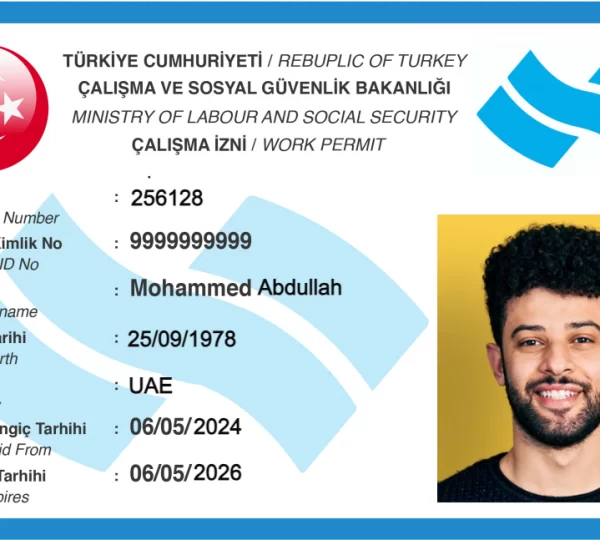
No. You do not need a work permit or residence permit to register or own a company in Turkey. Company registration and immigration status are completely separate matters under Turkish law. You can establish and own a Turkish company while living abroad and manage it remotely .
However, if you plan to live and work in Turkey as a director or employee of your company, you will need appropriate work and residence permits. These have additional requirements, including specific conditions about the number of Turkish employees .
No. All Turkish companies must have a registered address (şirket merkezi) in Turkey. This can be:
A rented office space
A shared or co-working space with dedicated address
A virtual office service ($100-1,500/month) providing address, mail handling, and basic reception services
The address is public and appears on all official company documents .
Turkey’s online company registration system represents a significant opportunity for international entrepreneurs. The combination of a fully digital MERSIS platform, the ability to complete the process remotely via Power of Attorney, and favorable treatment of foreign investors makes Turkey one of the most accessible jurisdictions for business formation in 2026.
However, the challenges facing foreign investors are real. The registration itself is only the first step. Operational hurdles—bank account access, language barriers, currency volatility, and ongoing compliance—require more planning and local support than many entrepreneurs initially expect.
The non-negotiable pillars of success are: (1) a Turkish CPA or local attorney for formation and legal protection, (2) a Turkish CPA for ongoing compliance and tax strategy, and (3) a realistic budget that accounts for monthly professional fees. These are not optional extras for foreign investors; they are the price of doing business in a sophisticated but complex market.
With the right guidance and expectations, you can have your Turkish company registered and operational within 3-4 days—and managed successfully for years to come.
At A&M Consulting Co., we support local and international investors and companies throughout the professional and reliable company formation as well as CPA Services in Turkey.
As a licensed accounting firm registered with TURMOB (the Union of Chambers of Certified Public Accountants of Turkey) and ISMMMO (the Istanbul Chamber of Certified Public Accountants), we combine technical expertise with practical guidance to help businesses end to end company registration and accounting smoothly and in full compliance with Turkish regulations.
By working with A&M Consulting Co. for accounting providing support, companies can reduce legal risks, improve accounting process, and establish compliant tax practices. This allows management teams to focus on business growth while ensuring that accounting & tax processes are handled professionally within Turkey’s dynamic regulatory environment.
DISCOVER OUR SERVICES:
You can reach out to our experienced consultans via email or by filling out the Contact Form on our website’s contact page
Yes. Using a Power of Attorney (PoA) prepared at a Turkish consulate in your home country, a Turkish representative (lawyer or consultant) can complete the entire registration process on your behalf. You do not need to travel to Turkey for the registration itself. However, some banks may still require a video call or, in rare cases, an in-person visit for account opening.
No. Turkey’s Foreign Direct Investment Law allows 100% foreign ownership of companies in most sectors. You are not required to have a Turkish co-founder, shareholder, or director unless you are entering a restricted sector (e.g., broadcasting, maritime transport, legal services).
The minimum capital for a Limited Liability Company (LLC) is 50,000 Turkish Lira (approximately $1,100 USD as of 2026). Crucially, you do not need to deposit this amount upfront—you have 24 months from the date of registration to contribute the full capital.
The typical timeline is 3-4 weeks from preparing your Power of Attorney to receiving your registration certificate. This includes:
PoA preparation at consulate: 1-3 days
Courier to Turkey: 3-7 days
Translation and notarization: 2-5 days
Tax ID and bank account opening: 2-5 days
Trade Registry processing: 5-10 business days
In urgent cases with all documents ready, registration can be completed in 1-2 weeks.
No. Company ownership and immigration status are completely separate. You can own and operate a Turkish company remotely from abroad without any Turkish work permit or residence permit. However, if you plan to live in Turkey and work as a director or employee of your company, you will need both a residence permit and a work permit.
No. Every Turkish company must have a registered legal address in Turkey. This can be a rented office, a co-working space, or a virtual office service (typically $150-1,500 per month) that provides an address, mail handling, and basic reception services. You cannot use a residential address or a foreign address.
Partially. Several Turkish banks (including İş Bankası, Garanti BBVA, and TEB) offer remote account opening with video call identity verification and attorney-assisted processes using your Power of Attorney. However, not all banks offer this, and some may still require an in-person visit. Your local consultant can advise which banks are most accommodating for non-resident foreign clients.
No, you cannot legally do your own taxes. Turkish law requires every company to have a registered financial advisor (SMMM) who certifies the company’s books and submits all tax returns. Attempting to operate without a CPA will result in fines, frozen tax accounts, and inability to issue invoices. Monthly CPA fees typically range from $250 to $1,500.
he main taxes are:
Corporate income tax: 25% on annual profits
VAT (KDV): Standard rate is 20% (reduced rates of 1%, 8%, or 10% apply to certain goods and services)
Withholding tax: 20% on dividends, 10% on interest, 20% on royalties (reduced under tax treaties)
Social security premiums (SGK): Approximately 35% of gross salary (employer + employee share)
Monthly VAT and withholding tax returns are required even if no tax is due.
Yes. A Turkish LLC can have a single shareholder and a single director. The director can be a foreign national, and you do not need to appoint a Turkish director. The same person can be both 100% shareholder and sole director.
The most common reasons are:
Missing or incorrect apostille on foreign documents
Documents not translated into Turkish by a sworn translator
Power of Attorney that does not specifically authorize company establishment and bank account opening
Proposed company name already taken or violating naming rules
Incomplete or inconsistent business purpose statements
Much harder than opening one. Dissolution requires a notarized general assembly resolution, publication in the Trade Registry Gazette, three separate tax clearance certificates, a 6-12 month liquidation period, and a final audit. Many foreign investors abandon their companies rather than complete formal dissolution, which leads to accumulating penalties and potential personal liability. Plan your exit strategy before you register.
Yes. Virtual office services are widely available in Istanbul, Ankara, and Izmir. They provide a registered business address, mail handling, and often phone answering services. Virtual offices are legally recognized for company registration, but they may not be sufficient for certain regulated activities or for obtaining some business licenses.
MERSIS (Merkezi Sicil Kayıt Sistemi) is Turkey’s Central Registry Record System—the digital platform for company registration. It allows you to submit your articles of association online, check name availability, and track your application. However, certain documents still require physical notarization and submission to the local Trade Registry Office.
No, but you need a Turkish-speaking representative. All registration documents are in Turkish, and the Trade Registry Office communicates in Turkish. By appointing a Turkish lawyer or consultant through a Power of Attorney, they handle all Turkish-language requirements. You do not need to speak Turkish yourself.
It depends. Turkey generally follows international sanctions regimes (UN, EU, US). Citizens of or companies based in countries under comprehensive sanctions (e.g., Syria, North Korea, Crimea) face significant difficulties with bank account opening and due diligence. Even if registration is technically possible, compliance reviews will be extensive. Consult with a Turkish attorney before proceeding.
Yes. Being physically in Turkey does not change the process—you still need a Power of Attorney if you want a representative to handle filings. However, you can also complete some steps in person (e.g., notary visits, bank account opening) without a PoA. Note that you cannot legally work for your company while on a tourist visa.
You can pay yourself either as:
Salary: Subject to income tax withholding and social security (SGK) contributions. Requires a work permit if you are physically working in Turkey.
Dividend: Distributed from after-tax profits. Withholding tax is 20% (reduced under many tax treaties). No work permit required if you are abroad.
Service fee: If your foreign company invoices the Turkish company (subject to transfer pricing rules).
Most non-resident owners use dividends to avoid work permit and SGK requirements.
Get your tax ID first, then open the bank account, then register. The sequence is:
Obtain potential tax ID numbers (for company and shareholders)
Open a corporate bank account (using the temporary MERSIS number)
Deposit capital (for JSCs; optional for LLCs)
Submit final registration to Trade Registry Office
Your Turkish representative will guide the correct sequence for your specific situation.


WhatsApp Us