

Summarize this article with AI
Turkey continues to serve as a strategic bridge between Europe and Asia, offering investors a large, youthful workforce and a growing economy. However, managing payroll in Turkey presents unique challenges, particularly due to persistent inflation and frequent regulatory changes. From the significant weakening of the Turkish Lira to the regular adjustment of minimum wage and tax bands, staying compliant requires constant vigilance .
As of mid-2025 and looking ahead to 2026, several critical updates have changed the landscape for employers. This guide provides a complete overview of the payroll process, statutory costs, mandatory benefits, and the latest compliance obligations you need to know to run payroll smoothly in Turkey.
Processing payroll in Turkey involves more than just calculating salaries. It is a structured process that can be broken down into three distinct phases to ensure accuracy and compliance
Before running the first payroll, employers must establish fundamental policies and gather essential data. This includes:
Business Registration: Your business must be registered, and your registered number must appear on all official documents, including paychecks .
Employee Information: Collecting comprehensive data on every employee is critical for accurate calculations .
Policy Definition: You need clear policies regarding work location, attendance (standard hours are 45 per week), leave, and salary components. This includes defining your pay schedule, as employees in Turkey are generally paid monthly .
During this phase, the pre-payroll data is fed into a payroll system (or managed by a provider) to calculate gross pay, statutory deductions, and net pay for each employee. This involves calculating income tax (which is progressive) and social security contributions .
Once calculations are complete, the focus shifts to execution and reporting:
Salary Payments: Payment instructions are sent to the bank for salary disbursement .
Payroll Accounting: Salaries are a major cost, so internal accounts must be meticulously updated .
Reporting and Compliance: This is the most challenging part. Employers must handle payroll tax in Turkey, which includes remitting income tax withholdings and social security premiums to the authorities .

One of the most significant compliance changes took effect on 1 July 2025, expanding the scope of mandatory bank payments for wages. This is a critical update for any employer managing payroll in Turkey .
Previously, employers with at least five employees were required to pay wages via bank transfer. The Regulation Amending the Regulation on the Payment of Salaries… has lowered this threshold to three or more employees .
This means that as of 1 July 2025, all employers with three or more employees must pay salaries, bonuses, premiums, and any similar entitlements exclusively through bank accounts .
Compliance: Failure to comply results in administrative fines. As of 2025, any cash payment made in violation incurs a fine of 2,179 TRY per employee, per month .
Tax Certification (Tevsik): Beyond labor law, tax legislation requires that any payment exceeding 30,000 TRY must be made through intermediary financial institutions (banks or PTT) to be properly documented. This applies even if you have fewer than three employees .
Evidence: Making payments through banks with clear descriptions (e.g., “July Salary”) serves as crucial evidence in case of future employment disputes .
Understanding the breakdown of salary and the total cost of employment is essential. The figures are subject to change, often bi-annually, due to economic conditions. The following data reflects the period starting 1 January 2026 .
The minimum wage has been significantly adjusted for 2026. It is crucial to note that income tax and stamp duty on the minimum wage are covered by the government for this period, resulting in a specific net amount .
| Component | Amount (TRY) |
| Gross Minimum Wage | 33,030.00 |
| – Employee Share – Insurance (14%) | -4,624.20 |
| – Employee Share – Unemployment (1%) | -330.30 |
| Income Tax & Stamp Duty | 0.00 |
| Net Minimum Wage | 28,075.50 |
| * Employer Share – Insurance (21,75%) | 7,184.00 |
| * Employer Share – Unemployment (2%) | 660.60 |
| Total Cost to Employer | 40,874.63 |
* The Turkish government provides social security premium discounts to employers who do not have any outstanding social security contribution debts:
For employees who have completed at least one year with the same employer, severance pay is calculated as 30 days of pay per year of service. However, there is a legal cap on the gross monthly salary used for this calculation. For the period of 1 January 2026 to 30 June 2026, this cap is 64,948.77 TRY per month .
Turkey applies a progressive income tax scale. For 2025, the rates range from 15% to 40% across five bands. Due to high inflation, these bands are adjusted periodically. For instance, the 15% rate applies to the first portion of annual income, while earnings above a certain threshold are taxed at 40% .
Social security contributions are a significant cost and are calculated on the employee’s gross salary, up to a maximum monthly earnings cap. As of January 2026, the minimum monthly premium base is 33,030 TRY, and the maximum is 297,270 TRY . The contributions are split between employer and employee :
Short-Term Insurance Premium: 2.25% (Employer only)
Pension & Disability Fund: 11% (Employer) / 9% (Employee)
General Health Insurance: 7.5% (Employer) / 5% (Employee)
Unemployment Insurance: 2% (Employer) / 1% (Employee)
Understanding statutory leave is vital for accurate payroll accruals.
Employees become entitled to paid annual leave after completing 12 months of service with the same employer .
14 working days for employees with 1 to 5 years of service.
20 working days for employees with 5 to 15 years of service.
26 working days for employees with 15+ years of service.
Employees under 18 or over 50 are entitled to 20 days after one year .
Maternity: Female employees are entitled to a total of 16 weeks of paid leave (8 weeks before birth, 8 weeks after). During this time, they receive two-thirds of their salary, paid by the Social Security Institution. Unpaid leave of up to six months is also an option .
Paternity: Fathers are entitled to 5 days of paid paternity leave, paid in full by the employer .
Employees with a medical certificate are eligible for paid sick leave. The Social Security Institution covers the cost after the first two days, though the employer typically pays the employee and then reclaims the funds .
Non-compliance with Turkey’s labor and tax laws can result in steep administrative fines. The government has set specific fines for various infractions, which are updated regularly. Here are key penalties for 2026 based on Labor Law No. 4857 :
| Unlawful Act | Administrative Fine (2026) |
| Violation of the obligation to notify the workplace | 302,485 TRY |
| Violation of the obligation to provide a written employment contract | 2,531 TRY per employee |
| Violation of the equal treatment principle | 2,531 TRY per employee |
| Violation of the collective dismissal procedure | 9,944 TRY per employee |
| Failure to pay wages via bank (as per new rules) | 2,179 TRY per employee/month |
| Failure to document payments over 30,000 TRY via bank | 10% of transaction amount (with min. penalties) |
Based on your request for information on payroll for foreign employees in Turkey, I have analyzed the provided search results. The core principle is that foreign employees with a valid Turkish work permit are subject to the same payroll, tax, and social security rules as Turkish nationals .
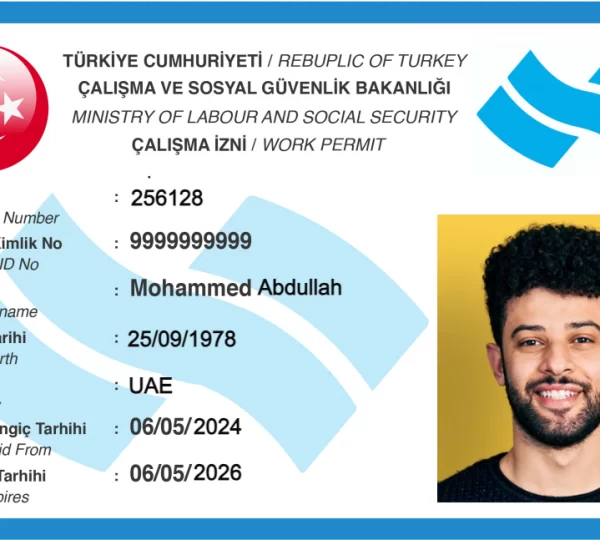
Before any payroll calculation begins, the foreign national must have a valid work permit, as the employer cannot legally pay a salary without one .
Employer Sponsorship is Key: The Turkish company sponsoring the work permit is the legal employer, even if the employee is paid from abroad. A formal, wet-signed Turkish employment contract is mandatory for the application .
2025/2026 Salary Thresholds: Work permit applications are subject to minimum salary requirements based on the employee’s role. As of late 2024 and moving into 2025/2026, these are tied to multiples of the gross minimum wage:
High-level managers & pilots: Minimum 5x the gross minimum wage .
Engineers/architects: Minimum 4x the gross minimum wage .
Department managers: Minimum 3x the gross minimum wage .
Positions requiring expertise: Minimum 2x the gross minimum wage .
Special Case: Persons of Turkish Descent: There is an expedited process for individuals of Turkish descent, who may be exempt from the labor market test and can eventually qualify for an indefinite work permit .
Once the work permit is secured, the payroll process largely mirrors that of a Turkish employee, but with a few critical exceptions.
Standard Deductions and Contributions: The employer must make the same social security and tax withholdings for a foreign employee as they would for a Turkish national . This includes:
Income Tax: Progressive rates from 15% to 40% .
Social Security (SGK): Employer contributions are approximately 20.75% , and employee contributions are 14% . The contribution ceiling and floor are updated regularly (e.g., for 2026, the minimum monthly earnings base is TRY 33,030.00) .
Unemployment Insurance: Employee pays 1%, employer pays 2% .
Stamp Tax: A duty of 0.759% applies to the gross salary for those on a local payroll .
Critical Exception: Social Security Exemptions: This is the most significant difference for international staff.
Short-Term Exemption (3 months): A foreign employee who remains covered by their home country’s social security system can be exempt from Turkish premiums for up to three months, provided they submit proof of foreign coverage .
Treaty-Based Exemption: If there is a social security agreement between Turkey and the employee’s home country, this exemption period can be extended beyond three months .
Without Exemption: If no foreign coverage or treaty applies, the employee must pay full Turkish social security contributions from day one .
Unemployment Insurance: Foreign nationals qualify for unemployment insurance, but this depends on a condition of reciprocity between Turkey and their home country .
The employer’s responsibilities extend beyond just writing a paycheck.
Mandatory Turkish Employment Contract: A Turkish employment agreement is non-negotiable and must be submitted with the work permit application. Foreign-language contracts or offer letters are not accepted .
Equal Treatment: Foreign employees are entitled to the same rights under Turkish Labor Law No. 4857 as local staff. This includes working hours (45 hours/week), overtime pay (150% of the regular wage), and statutory leave (14-26 days) .
SGK Registration: The employee must be registered with the Social Security Institution (SGK) before starting work. This is a key step in the onboarding process .
Data Protection: Employers must also comply with Turkey’s Data Protection Law (KVKK), which is similar to the EU’s GDPR .
The rise of remote work introduces complex scenarios that require careful planning .
Cross-Border Remote Employment: If a foreign national resides in Turkey and works remotely for a company abroad, this can trigger tax residence, social security, and work authorization issues in Turkey. It may even create a “permanent establishment” for the foreign company, exposing it to Turkish corporate tax .
Tour Operator Representatives: A specific update for 2026 clarifies that foreign tour operator representatives working in Turkey for up to eight months must apply for a work permit exemption, not a full work permit. This simplifies the process for short-term seasonal roles in this specific sector .
One of the most critical and frequently misunderstood requirements in Turkish labor law is the “5:1 Employment Ratio” . For almost every foreign employee a company wishes to hire, it must employ at least five (5) Turkish citizens .
This rule applies to all workplaces, regardless of their size or sector, and is strictly enforced by the Ministry of Labor to ensure that foreign nationals do not displace local workers .
If the foreign applicant is a shareholder or director of the company they work for, the application of the 5:1 rule has specific nuances:
Six-Month Grace Period for Founders: For foreign partners who set up a company (LLC or JSC), the 5:1 ratio is typically waived for the first six months of the company‘s operation . This allows the business time to scale and hire local staff. However, by the time of the first work permit renewal, the five Turkish employees must be on the payroll .
Shareholder Application Rule: If a foreign shareholder applies for a work permit without meeting the specific high-capital exemption (detailed below), the 5:1 employment criteria will apply to their application from the outset .
The government has introduced expanded waivers to these criteria, particularly for roles requiring specialized expertise. The 5:1 ratio may not apply in the following situations :
High-Volume Sales Companies: Companies with net sales of 50 million TRY or more in the previous year can sponsor up to five foreign employees without meeting the 5:1 ratio .
Information Technology (IT) Sector:
IT Companies: Fully waived from the ratio for all technical roles (software development, cybersecurity, etc.) .
Non-IT Companies: May sponsor up to two foreign IT professionals in technical roles without the ratio .
Technoparks and R&D Centers: Foreigners working in officially registered Technoparks or R&D centers in innovation roles are waived .
Shareholders with High Capital: The 5:1 rule does not apply to foreigners who apply for a work permit as a shareholder with a capital contribution of USD 100,000 . (Otherwise, a foreign shareholder must hold at least 20% of the share capital with a minimum paid-in capital of 500,000 TRY, and the ratio applies) .
Long-Term Residents: Foreigners who have legally resided in Turkey for 3 out of the last 5 years may qualify for a waiver, provided the employer maintains at least a 1:1 ratio of Turkish to foreign employees (max 3 foreigners under this waiver) .
Special Personal Status: This includes spouses or children of Turkish citizens, holders of long-term residence permits, and citizens of the Turkish Republic of Northern Cyprus .
Specific Sectors: Applications in tourism, aviation (foreign airlines), domestic work (caregivers), and public sector projects are often exempt from this ratio .
Failure to meet the 5:1 ratio is a primary reason for work permit rejection . Engaging in paid employment without a valid permit results in heavy administrative fines for the employer and deportation with an entry ban for the foreigner .
To help you visualize the key differences, here is a summary table comparing standard payroll for Turkish nationals and the special considerations for foreign employees:
| Feature | Standard for Turkish Nationals | Specific Considerations for Foreign Employees |
| Work Authorization | Turkish citizenship. | Valid work permit sponsored by Turkish employer. No permit = illegal work. |
5:1 Employment Ratio |
Not applicable. | Mandatory Quota: Employer must employ 5 Turkish citizens for every 1 foreign employee. |
| (Exceptions apply for IT staff, Technoparks, high-capital shareholders, etc.) . | ||
| Work Permit Quotas | No quotas. | Subject to annual quotas per company based on size and sector, in addition to the 5:1 ratio . |
| Minimum Salary Requirement | Standard minimum wage. | Higher thresholds based on job title for work permit eligibility (e.g., managers must earn 5x minimum wage) . |
| Employment Contract | Turkish employment contract. | Mandatory Turkish employment contract (wet-signed) for work permit application. Foreign-language contracts are not accepted . |
| Income Tax | Progressive rates (15%-45%). | Same as Turkish nationals . |
| Social Security (SGK) | Standard contributions (Employee 14%, Employer ~20.75%). | Potential exemption for up to 3 months (or longer by treaty) with proof of foreign coverage. Otherwise, pays full Turkish SGK . |
| Unemployment Insurance | Employee 1%, Employer 2%. | Applicable, subject to reciprocity with the employee’s home country . |
Shareholder Status |
Standard shareholder rights. | Capital Exemption: Shareholders investing USD 100,000 are exempt from the 5:1 ratio. |
| 6-Month Grace Period: New company founders get 6 months to hire the required 5 Turkish staff . |
Managing payroll in Turkey can be complex due to evolving tax laws, social security requirements, and labor regulations. Outsourcing your payroll to a professional accounting firm ensures full compliance, accurate calculations, and timely reporting, while freeing your team to focus on core business operations.
Whether you are establishing a new company, managing a branch, or expanding an existing investment, partnering with a qualified Payroll Provider Firm in Turkey is a strategic move. Proper payroll management, including employee salaries, social security contributions, withholding taxes, and statutory reporting, directly affects your company’s financial stability and regulatory compliance.
At A&M Consulting Co., we are a trusted accounting and payroll service provider in Turkey, fully registered and accredited with TURMOB (Union of Chambers of Certified Public Accountants of Turkey) and ISMMMO (Istanbul Chamber of Certified Public Accountants). Our team combines technical expertise with a client-focused approach to deliver accurate, timely, and compliant payroll services.
We offer outsourced payroll solutions tailored to your needs, including:
Monthly payroll processing and payslip preparation
Employee social security (SSI) and tax withholding
Compliance with Turkish Labor Law and employment regulations
Statutory reporting to authorities and banks
Payroll for expatriates, including tax and treaty considerations
Integration with accounting and financial reporting systems
Outsourcing payroll with A&M Consulting Co. provides peace of mind, reduces compliance risks, and supports your company’s growth in Turkey’s dynamic business environment.
DISCOVER OUR SERVICES:
You can reach out to our experienced consultans via email or by filling out the Contact Form on our website’s contact page
As of 1 January 2026, the gross monthly minimum wage is TRY 33,030.00. After deductions (with the government covering income tax and stamp duty on the minimum wage), the net pay for the employee is TRY 28,075.50. The total monthly cost to the employer is approximately TRY 40,874.63 .
Employees are generally paid on a monthly basis. Payroll cycles must be clearly defined in the company’s employment policies .
The standard workweek is 45 hours, typically distributed across weekdays. Overtime must be compensated at a rate of 150% of the regular hourly wage .
The employer’s total cost is significantly higher than the gross salary. For a minimum wage employee in 2026, the employer pays an additional ~23.75% on top of the gross wage, broken down as:
Employer’s Insurance Share (with incentive): ~21.75%
Employer’s Unemployment Fund: 2%
Note: Rates can vary slightly based on specific incentives applied .
Turkey uses a progressive income tax system. For 2025/2026, the rates are:
15% (lowest band)
20%
27%
35%
40% (highest band)
The bands are adjusted periodically to account for inflation .
Employees become entitled to paid annual leave after completing 12 months of service with the same employer. The duration depends on tenure:
1 to 5 years: 14 working days
5 to 15 years: 20 working days
15+ years: 26 working days .
Female employees are entitled to 16 weeks of paid maternity leave (8 weeks before birth, 8 weeks after). During this time, the Social Security Institution (SGK) pays the employee two-thirds of their salary. An additional 6 months of unpaid leave is also available .
Yes. Fathers are entitled to 5 days of paid paternity leave, which must be paid in full by the employer .
This is a mandatory quota. For every foreign national you employ, you must also employ at least five Turkish citizens. This rule applies to almost all sectors and is strictly enforced for work permit approval .
Yes. Common exceptions include:
IT Sector: Fully waived for technical roles in IT companies; non-IT companies can hire up to two IT professionals without the ratio .
Technoparks: Employees working in R&D centers are exempt .
High-Value Shareholders: Foreign shareholders investing USD 100,000 are exempt .
Startups: New companies have a 6-month grace period to hire the five required Turkish staff .
The salary requirement depends on the job title and is tied to multiples of the gross minimum wage :
High-level managers & pilots: 5x minimum wage
Engineers/architects: 4x minimum wage
Department managers: 3x minimum wage
Positions requiring expertise: 2x minimum wage
It depends on their home country coverage. If they provide proof of ongoing coverage in their home country, they can be exempt for up to 3 months . If Turkey has a social security agreement with their home country, the exemption can be extended. Otherwise, they must pay full Turkish SGK contributions from day one .
Possibly. If the owner/director invests at least USD 100,000 in the company, they are fully exempt from the 5:1 ratio. For those investing less (or the minimum required capital), the 5:1 ratio applies, but new companies receive a six-month grace period to meet the requirement .


WhatsApp Us