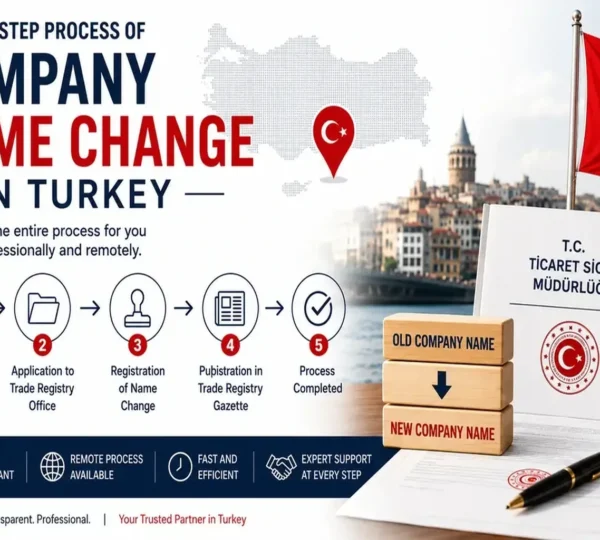

Closing a company in Turkey requires the completion of legal, tax, accounting and Trade Registry procedures. Company winding up, also known as company liquidation or company dissolution, is the formal process of closing a legal entity, settling its liabilities, liquidating its assets and completing its deregistration from the Turkish Trade Registry.
For foreign-owned companies, the winding-up process may also involve final tax filings, accounting records, employee and SGK obligations, creditor notifications, shareholder resolutions and other corporate procedures.
A&M Consulting Co. provides end-to-end support for foreign investors and international companies that want to close and liquidate their companies in Turkey. We assist with the accounting, tax, corporate and Trade Registry procedures required throughout the winding-up process.
Company winding up in Turkey is the formal process of closing a company and bringing its legal existence to an end. It generally involves ending the company’s business activities, identifying and liquidating its assets, settling outstanding debts and liabilities, completing the required tax and accounting procedures, and ultimately deregistering the company from the Turkish Trade Registry.
The winding-up process may be initiated voluntarily by the shareholders or may arise through a compulsory procedure ordered by a court. During liquidation, the company continues to exist as a legal entity for the purposes of completing the liquidation process, including settling its liabilities and distributing any remaining assets to shareholders where applicable.
For foreign-owned companies in Turkey, company winding up may require coordination of shareholder resolutions, liquidator procedures, tax and accounting obligations, creditor notifications and Trade Registry filings. Completing these procedures correctly is essential for formally closing the company and avoiding unresolved corporate, tax or financial obligations.
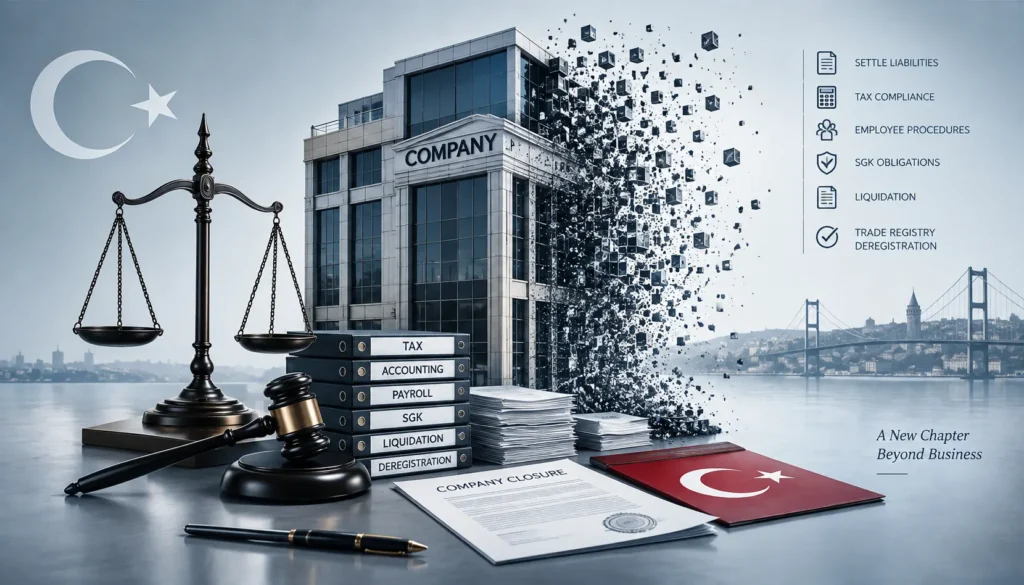
Company liquidation in Turkey can generally take place through voluntary or compulsory winding-up procedures. The applicable procedure depends on why the company is being dissolved and the circumstances surrounding its legal and financial position. For foreign investors, voluntary liquidation is generally the relevant route when shareholders decide to close a company that is no longer required.
Voluntary company liquidation occurs when the shareholders decide to close the company and initiate the winding-up process. This may be appropriate when the company has completed its business purpose, the shareholders no longer wish to continue the business, or the company is being closed as part of a broader business restructuring.
The process generally starts with a General Assembly resolution approving the dissolution and the appointment of a liquidator. The required corporate documents are then submitted to the relevant Trade Registry Office, followed by the liquidation procedures required for settling the company’s liabilities, completing its tax and accounting obligations and distributing any remaining assets where applicable.
Compulsory company liquidation occurs when dissolution is required through a legal or court process rather than being initiated solely by the shareholders. It may arise in circumstances such as insolvency, disputes or other situations specified under applicable Turkish legislation.
In a compulsory liquidation, the relevant legal authority determines the applicable procedure and the liquidator may be appointed through the court process. The liquidation involves addressing the company’s assets, liabilities, creditors and other outstanding legal and financial obligations before the company can be formally removed from the Trade Registry.
The documents required for company liquidation in Turkey depend on the company’s legal structure, financial position and whether the winding-up is voluntary or court-ordered. For a voluntary closure, the process normally starts with the shareholders’ formal decision to dissolve the company and appoint a liquidator.
The main documents and records may include:
For foreign-owned companies, it is particularly important that the corporate, tax and financial documentation is complete and consistent before the final deregistration application is submitted. Outstanding tax, accounting, social security obligations or employee matters can affect the completion of the closure process.
The exact documentation should therefore be reviewed according to the company’s circumstances before beginning the liquidation procedure.
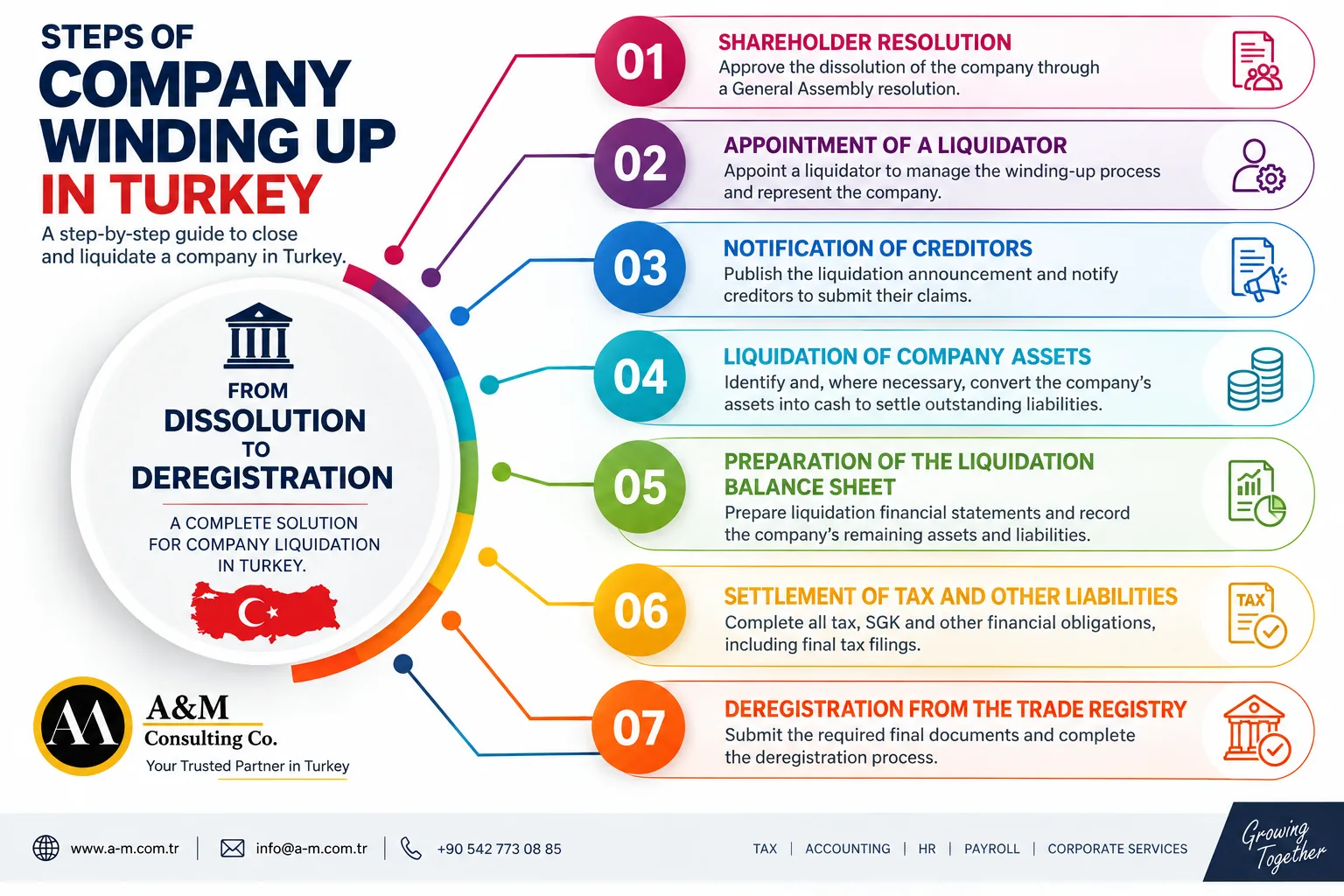
The process of winding up a company in Turkey involves several legal, corporate, tax and accounting procedures. The exact requirements may vary depending on the company’s legal structure, financial position and whether the liquidation is voluntary or compulsory. The main steps generally include the following:
For a voluntary company winding up, the process generally begins with a General Assembly resolution approving the dissolution of the company. The resolution should comply with the company’s Articles of Association and applicable Turkish commercial legislation. The required corporate documents are then submitted to the relevant Trade Registry Office for registration and publication.
A liquidator is appointed to manage the company’s liquidation process. The liquidator is responsible for managing the company’s assets and liabilities, completing the required corporate and financial procedures, and representing the company throughout the liquidation. In compulsory liquidation proceedings, the liquidator may be appointed through the relevant court process.
Creditors must be given an opportunity to submit their claims against the company. The liquidation announcement is published through the Turkish Trade Registry Gazette, and the liquidator manages the creditor notification and claim process as required under the applicable procedure.
During liquidation, the company’s assets are identified and, where necessary, converted into cash to settle outstanding liabilities. The proceeds are used to meet the company’s debts and other obligations. Any assets remaining after the company’s liabilities have been settled may be distributed to the shareholders in accordance with the applicable rules.
The company’s financial position must be properly recorded throughout the liquidation process. The liquidator, together with the company’s accounting professionals where applicable, prepares the required liquidation financial statements and records the company’s remaining assets, liabilities and transactions.
Before the liquidation can be completed, the company must address its outstanding tax, accounting, social security and other financial obligations. This may include final tax filings, VAT obligations, corporate tax matters and outstanding SGK liabilities, depending on the company’s activities and circumstances. Professional Tax Compliance Services in Turkey and accounting support can help ensure that the company’s reporting and financial obligations are properly addressed.
After the liquidation procedures and outstanding obligations have been completed, the required final documents are submitted to the Trade Registry. Once the company is officially deregistered, its legal existence comes to an end in accordance with the applicable Turkish company law procedures.
The timeframe for company closing in Turkey depends on the company’s legal structure, financial position, outstanding liabilities, number of creditors, and the completion of tax and Trade Registry procedures.
For a straightforward voluntary liquidation, the process may take several months. However, companies with outstanding debts, unresolved tax matters, ongoing legal disputes, or complex asset structures may require considerably more time.
Several factors can influence how quickly a company can complete its winding-up process:
Companies should therefore avoid relying on a fixed completion date before reviewing their financial and legal position.
Accounting and tax compliance remain important throughout the winding-up process. The company must continue maintaining its statutory accounting records and completing applicable tax obligations until the liquidation process is formally concluded.
Professional Accounting and Bookkeeping Services in Turkey can help ensure that financial records, liquidation accounts and statutory filings are properly managed during this period.
Similarly, companies should review their outstanding tax obligations and final filings as part of the closure process. Proper Tax Compliance Services in Turkey can help identify and address outstanding compliance requirements before the final deregistration.
Delays in company liquidation may occur when documents are incomplete, accounting records are not up to date, tax obligations remain unresolved, or required Trade Registry procedures are not completed correctly.
For foreign-owned companies, the process can be more complex because shareholders, directors and authorised representatives may be located outside Türkiye. Coordinating corporate documents, accounting, tax procedures and official registrations in advance can help make the winding-up process more efficient.
A&M Consulting Co. provides Company Dissolution and Company liquidation support in Turkey, including coordination of accounting, tax compliance, corporate documentation and Trade Registry procedures for foreign-owned companies.
The cost of closing a company in Turkey varies according to the company’s legal structure, financial position, outstanding liabilities and the complexity of the liquidation process. A company with no employees, significant assets or unpaid liabilities will generally require fewer procedures than a business with ongoing operations, creditors or unresolved tax matters.
There is therefore no single fixed price for company liquidation in Turkey. The total expenses depend on the circumstances of each business and the professional and administrative work required to complete its closure.
The expenses associated with liquidating a company in Turkey may include:
The exact cost will depend on the company’s circumstances and the number of procedures required.
Ending business activities does not automatically terminate a company’s accounting and tax responsibilities. During the liquidation period, the company may still need to maintain its statutory records, prepare financial statements and submit the required tax declarations.
Companies should therefore consider ongoing accounting and tax compliance costs when preparing their liquidation budget.
Professional Accounting and Bookkeeping Services in Turkey can help maintain the company’s financial records and statutory reporting during the closure process.
Outstanding tax obligations should also be identified and resolved before the company reaches the final stage of dissolution and deregistration. Our Tax Compliance Services in Turkey can support the review of tax filings and outstanding compliance requirements.
For foreign shareholders, company closure in Turkey may involve additional documentation and administrative requirements.
For example, additional expenses may arise when:
These factors should be assessed before the winding-up procedure begins so that shareholders have a clearer understanding of the expected scope of work.
Several factors can increase the time and expense involved in business liquidation in Turkey.
These include:
Outstanding liabilities: Unpaid taxes, supplier balances, bank debts or other obligations may require additional procedures before closure.
Employees: Companies with employees may need to complete termination, payroll and SGK procedures before the liquidation can be finalized.
Company assets: Real estate, vehicles, inventory or other assets may need to be sold, transferred or otherwise dealt with during the liquidation.
Accounting issues: Missing records, unreconciled accounts or outstanding declarations can create additional work during the closing process.
Foreign documentation: Overseas shareholders may need to arrange notarization, apostille, legalization and translation of corporate documents.
Before beginning a voluntary liquidation, shareholders should review the company’s current financial and corporate position.
A preliminary review should cover:
This assessment can help determine which procedures are necessary and avoid unnecessary work during the company dissolution process.
Foreign shareholders may need to coordinate accounting, taxation, corporate documentation and Trade Registry procedures when closing a business in Turkey.
A&M Consulting Co. provides coordinated support for foreign-owned companies throughout the liquidation and deregistration process, covering accounting, tax compliance, corporate procedures and related administrative requirements.
For companies that are ready to cease operations, a preliminary assessment can establish the required steps and the potential scope of the closure before the formal process begins.
Yes. A company established in Turkey with foreign shareholders can generally be wound up and deregistered through the applicable Turkish liquidation procedures. Foreign ownership itself does not prevent a company from entering liquidation.
The process may involve several parties and authorities, depending on the company’s circumstances, including the shareholders, liquidator, Trade Registry, Tax Office and, where employees are involved, the relevant SGK and payroll authorities.
For foreign-owned companies, particular attention should be given to:
Foreign shareholders do not necessarily need to establish a new Turkish company simply because an existing company is being closed. The appropriate procedure depends on the company’s legal status, assets, liabilities, employees and outstanding obligations.
A&M Consulting Co. can coordinate the tax, accounting, payroll, social security and corporate procedures required for foreign-owned businesses throughout the company closure process.
Once the company liquidation process in Turkey has been completed and the company is removed from the Trade Registry, its legal existence comes to an end. However, certain practical and administrative matters may still need to be addressed depending on the company’s circumstances.
After the completion of the dissolution and liquidation procedure, the company should ensure that its remaining tax, accounting, employment and regulatory obligations have been properly finalized.
Key post-liquidation matters may include:
For foreign shareholders, completing these steps correctly is particularly important because closing a Turkish company involves more than simply stopping business activities. The company’s tax obligations, accounting records and statutory registrations should be properly finalized before the liquidation is considered complete.
If you are planning to close a Turkish company, our Tax Compliance Services in Turkey can help ensure that outstanding tax and reporting obligations are addressed during the closing process.
For investors who are considering establishing a new business after closing an existing entity, our Company Registration in Turkey service provides support with the incorporation process and related registrations.
SEO keyword variations used naturally in this section:
Company debts and outstanding liabilities must be addressed as part of the liquidation process. Entering liquidation does not automatically cancel a company’s obligations to creditors, the Tax Office, employees, suppliers or other parties.
During the winding-up period, the liquidator is responsible for identifying the company’s liabilities and managing the settlement process. Depending on the company’s financial position, this may include:
The company’s available assets may be used to satisfy valid liabilities in accordance with the applicable liquidation procedure. If the company has insufficient assets to meet its obligations, additional legal procedures may become relevant depending on the circumstances.
Outstanding tax and social security obligations require particular attention before the company can complete its closure. Final tax filings, accounting records and relevant tax compliance procedures should be reviewed as part of the liquidation process.
Companies with employees should also ensure that their SGK registration and social security obligations and payroll-related matters have been properly addressed.
The existence of outstanding debts does not simply disappear because shareholders decide to close the business. Creditors and authorities must be taken into account during the liquidation process, and the company’s liabilities need to be dealt with before the final closure can be completed.
For this reason, shareholders should review the company’s assets, liabilities, tax position, accounting records and creditor claims before initiating the winding-up procedure. This can help identify potential issues at an early stage and establish the appropriate course of action.
In certain circumstances, a company that has entered liquidation may be able to withdraw from the liquidation process and continue its business, provided that the applicable legal requirements are satisfied.
The decision to return from liquidation generally requires the company’s shareholders to formally approve the continuation of the company and complete the relevant corporate and Trade Registry procedures.
A withdrawal from liquidation may be considered where the reasons for closing the company no longer exist and the shareholders decide that the company should continue its activities.
Before taking this step, the company should review its:
Where withdrawal from liquidation is legally possible, the necessary shareholder or General Assembly decision should be prepared and the required documents submitted to the relevant Trade Registry Office.
The company’s accounting and bookkeeping records should also be brought up to date so that its financial position is properly reflected when the company resumes its activities.
Tax and statutory compliance should be reviewed before the company returns to normal operations. Where applicable, Tax Compliance Services in Turkey can help identify outstanding declarations and other obligations.
The possibility of withdrawing from liquidation and the procedure to be followed depend on the stage of liquidation and the company’s specific legal circumstances. Once the liquidation has been fully completed and the company has been deregistered, the situation is different from a company that is still undergoing liquidation.
For this reason, shareholders considering a return from liquidation should obtain a review of the company’s current status before taking further corporate action.
Closing a company in Turkey requires more than completing the liquidation procedure and submitting the final Trade Registry documents. Foreign-owned businesses should also ensure that their tax, accounting, payroll, SGK and electronic reporting obligations are properly finalized.
A&M Consulting Co. provides end-to-end support for foreign companies throughout the company closure and deregistration process in Turkey, including:
Our team can coordinate the accounting, tax, Turkish social security system and corporate procedures required to bring the company’s activities to an orderly conclusion.
If you are considering closing a Turkish company, you can Contact A&M Consulting Co. for professional assistance and discuss your company’s specific circumstances with our team.
Company winding up is the formal process of bringing a company’s business affairs to an end, settling its liabilities, dealing with its assets and completing the required deregistration procedures.
Closing a company generally involves a shareholder decision, appointment of a liquidator, creditor notifications, settlement of liabilities, completion of tax and accounting procedures, and final deregistration with the Turkish Trade Registry.
Yes. Foreign-owned companies established in Turkey can generally enter liquidation, subject to the applicable corporate, tax and Trade Registry requirements.
The timeframe varies depending on the company’s financial and corporate circumstances. Outstanding tax matters, creditors, employees, assets and incomplete accounting records can all affect the duration.
There is no single fixed cost. Expenses may include Trade Registry fees, notary and translation costs, liquidator fees, accounting and tax compliance services, employee-related costs and the settlement of outstanding liabilities.
Entering liquidation does not automatically cancel company debts. Outstanding obligations to creditors, employees, tax authorities, SGK and other parties must be addressed during the liquidation process.
The company must complete the applicable employment termination, payroll procedures and SGK obligations before the closure process is completed.
Depending on the stage of the process and the company’s circumstances, shareholders may be able to decide to continue the company’s activities and complete the required corporate and Trade Registry procedures to withdraw from liquidation.
The required documents vary according to the company’s legal structure and circumstances but may include shareholder resolutions, liquidator documents, financial statements, tax records, creditor information and Trade Registry documentation.
Company assets may be used to settle outstanding liabilities. If assets remain after the company’s obligations have been addressed, they may be distributed to shareholders in accordance with the applicable rules.
After final deregistration, the company’s legal existence comes to an end. Corporate, tax, accounting, payroll and social security records should nevertheless be retained for the applicable statutory period.
After the liquidation procedures have been completed, the required documents are submitted to the relevant Trade Registry Office for final deregistration. Once the deregistration is registered, the company’s legal existence comes to an end. The company should also ensure that its final tax, accounting, payroll and social security obligations have been addressed before this stage.
The final review may include outstanding tax returns, VAT and other tax liabilities, accounting records, employee-related payroll obligations and SGK obligations. Companies should also ensure that their statutory financial records and other required filings are complete before final deregistration.
Company records should not simply be discarded after the liquidation has been completed. Accounting and bookkeeping records, tax documents, liquidation financial statements, corporate resolutions, Trade Registry documents, payroll records and social security records should be retained for the applicable statutory period.
For foreign-owned companies, maintaining organized records can also make it easier to respond to future requests from authorities or other legally entitled parties.
During liquidation, company assets may be used to settle outstanding liabilities and creditor claims. This can include cash, receivables, inventory, vehicles, equipment and other company-owned property.
If assets remain after the company’s liabilities have been properly addressed, the remaining value may be distributed to shareholders in accordance with the applicable rules. Asset disposals and distributions should be properly recorded in the company’s accounting and bookkeeping records and considered as part of the final tax compliance process.
If you still have questions about closing, liquidating or deregistering a company in Turkey, our team can review your specific circumstances and explain the relevant procedures.
Whether you are dealing with outstanding tax liabilities, employees and SGK, company assets, creditors, accounting records or the final Trade Registry procedures, getting the process reviewed before taking action can help identify potential issues.
Our team provides support to foreign investors and international companies throughout the company closure process in Turkey.
Contact A&M Consulting Co. for guidance on your company’s liquidation and closure requirements.

Certified Public Accountant (CPA)
Recent Posts
WhatsApp Us